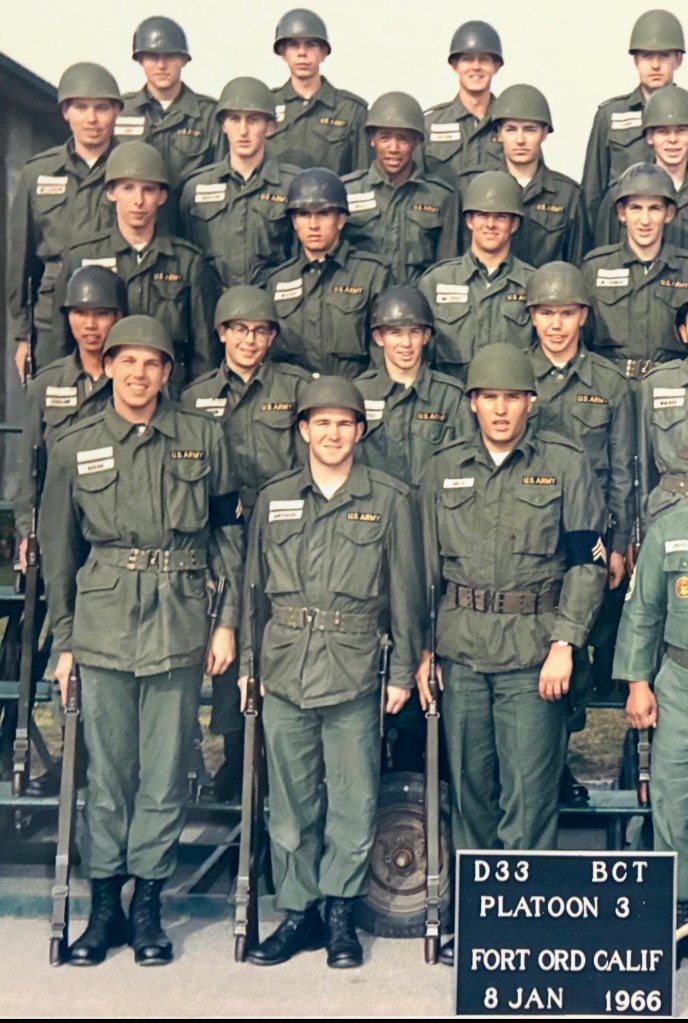
I know at least one of these gentlemen came back from Vietnam, the only version of my dad I’ve ever known. Like Agent Orange, the trauma didn’t stay there, but travelled back with him, a parasite of war. However, he made it out, made a life, fed the parasite just enough so it wouldn’t tear apart his insides. But now, here we are, the DNA of a long ago nightmare burrowing to the surface. My father is sick inside a sick country, luckily he never deceived himself into thinking he saved anything. He’s still the quiet guy, deeply thinking about the meaning of it all, still unwilling to ditch his uniform on the floor of a Sea-Tac restroom so a cab will pick him up and carry him home. I’m the cab driver now, taking him wherever he wants to go. He’ll always be a man first. The rest is just camouflage.
Writing is often better than talking. At least for me. I can talk to myself through others there. The characters that come out from the fog. They have something to say.
Day in and day out I talk to walls. Stiff apparitions asking for liquid amongst the plaster in their mouths. The cement builds up. What nourishment is there! Where the water only soothes the symptom.
The shallows have provoked a destructive sense of vulnerability where the cat chases its tail. I fight by turning off my filter; like I’m combating monotony with daring statements of defiance.
But it’s just bad jokes,
erratic gesticulations,
and stories that were better left buried.
Mean and dark to be kicked out of where I cannot leave.
Great, I’m pleading with something that’s not there again. To be unconditionally understood. Where does the man go when dad dies?
The cellphone in the classroom fight is a war of attrition. I see it every year. Week three, faculty morale is wavering. Holes appearing in the chainmail. We are down to the metaphorical pork-and-beans and thimbles-of-water stage of depleted resources. Where is Roboteacher, cousin to Robocop? A legend back from the dead to shoot the phones out of students’ hands with mind-blowing yarns about supply and demand and comparative advantage. Wowed them awake, and together, we all high-five in the middle of the classroom. They all say thank you. For once, we teachers become the kings and queens of the building built to look like a mega church. For a second it was a perfect word, until I looked up from my own screen and saw something different.
A limit has never been an external concept for me, rather a limit is dependent upon a range of subjective factors contingent on how far I want to press the line between rationality and irrationality. Losing control reminds me of my youth, perhaps because I never had it, or I never knew what to do with it when it was on my lap. It is odd, now that I’m more or less a stable adult, how hard it is to watch some of my students lose control.
It’s remarkable how exceptional I think I am when it comes to navigating dangerous territory. This has nothing to do with my treatment of others, rather how I want to live without hands. When I was faced with a student the other day who did not want to live, and who’s silence proved their point, the blending of the rational and irrational terrified me, and I had this overwhelming feeling that I needed to take over the controls and plunge us into the deep and dark waters of timelessness. I’ve learned that forgetting time makes it easier to be. But to be handless in a submarine…
That they wanted to only talk to me fed my ego, yet left me an imposter. Who really am I to help? I, the one who has been broken and repaired so many times that my identity is plural. I, the one of many masks, both civilized and contrived. We, both the I of my self talk and the me, the listener inside.
“Do not die, I swear to you, do not die because tragedy will become a friend and you will learn how to harden. It will become old hat, but be warned, you will miss the intensity of youth.”
To be ridged like scar tissue and ask of my students to be mailable as water is a form of self-talk long gone from my internal set of tools and a concept I use to obfuscate the truth that I have no answers to make this world make sense. It is worth living long enough to realize this is a comedy.
“Do not die, live! Live, because you’re almost at the best part, the part that will split your consciousness into water and oil.”
Shake up your mind, and for better or worse, watch your heavy memories shape your actions as you stand by, powerless to subvert your unconscious behavior. The best you can do is keep your eyes open and watch them rise, to collect at the top and unify into one imperfect self who deserves to be.
Sometimes it is better to stay awake in the dead of night.
Brackenridge Varsity girls’ tournament season comes to a close. The three words that come to mind to explain our progress is commitment, mindset, and patience. Most of our players don’t have a history playing club soccer so we’ve been working double time to acquire new skills to improve upon our performance from last year. It’s a tall order but the team has shown unwavering commitment to reach the next level and compete. I’ve been surprised by their ability to keep fighting, even when they’re frustrated and feel like all is lost.
It takes patience to wait for the results you want immediately, especially when your pride and reputation are perceived to be on the line. We’ve had our fair share of disappointment and growing pains the past two weeks. However, how are we to succeed if we don’t face periods of adversity? Unfortunately, getting beat has always been a part of the process of winning.
I see great signs of future success emerging on the field. I know it’s hard for our players to see, but the plan has always been to ‘click’ and show our mettle when it matters the most. I believe we’re on track to deliver when it counts and maintain our consistency on the field through the course of district competition.
It has been a true honor to be part of this process with such a fantastic group of players and coaches. Things always take longer to come together than anticipated; this is a law of living I’ve come to realize through experience. That you can achieve anything if you don’t give up is also a principle I very much hold to be true. Our time is sure to arrive.
Coaching is an important part of my life and in ways I cannot completely articulate yet. All I know is that I come home feeling like I’m doing something meaningful and that makes me feel valuable. as I’ve gotten older and comfortable with my life the urge to help others has become the most important thing in my life.
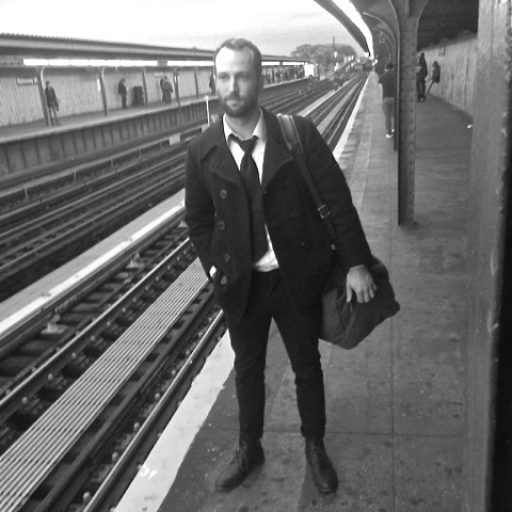
New York City, 2013. When I was a complete train wreck.
As I’m writing this my computer reminded me that tomorrow is Flag Day. I often tell my students Flag Day is my favorite holiday because it’s weird and I like seeing their reaction. When I began teaching high school seniors two years ago, I relied on being both weird and sincere rather than being authoritative and serious. I suppose I decided to do this because I am neither concerned with control or punctuating knowledge through driving home a topic’s severity. Student’s these days see too much hollow authority through their parents, and teenagers have a penchant to steer most of their situations to the dramatic and catastrophic. I’m no stranger to this.
I was born without the ability to remain calm. My issues with anxiety are perhaps genetic, or more likely learned. They are for sure environmental and have plagued me for the better part of my existence. As a preteen, teen, and twenty-something, and a thirty-nothing I used substances, relationships, and a strange obsession with both politics and professional baseball to both mask and ironically build my anxiety into a fortress of sustained self-emulation. I can collectively describe my fascination with the above, as akin to a madman frantically betting on the ponies with other people’s money to climb out of debt. At some point, usually when I’d have an “episode”, I’d run off with the money and burn down what remained stable in my life. Robbing Peter to pay Paul is a game the desperate play when they try to outrun one stressor by suppressing that stressor with another. It’s like a psychological speed ball. When I’m high I am not anxious, when I’m hungover, I am anxious. Let the wheel keep on rolling and watch the horses run.
Approaching 40, I realized that I can usually be funny whenever I want. I’m even funnier when I drive over myself with the funny bus. I realized by being myself I can make people laugh and I can purposely direct people to laugh at me. For example, I made a big deal about believing that my strep throat was likely cancer, and I juiced it to its full extent. Obvious to everyone else, I did not have a life threatening disease, but when I went as far as promising away my belongings to my students and coworkers, it became a sort of game. We all knew it was bullshit, but it was fun for some macabre reason. It was the absurdity of the whole thing that turned what would normally be a tragic or bizarre escapade into a collective joke shared by my students and colleagues. I even had a teacher hand me a rebate on having some local law students draw up my last will and testament. My anxiety about my health didn’t go away but turned into something else. I turned it into a punchline, a joke to ridicule and brush aside. Self-effacing humor works way better than fucking up your life by burning bridges. It took me 40 years to just be brave and let it all go.
The Jack or all trades has commitment issues. I often use my frenetic and bi-polar resume to impress people about all the shit I’ve done in my life. Yes, I’m proud of all the risks I’ve taken, how a guy like me went from an academic and traveler, to a cheese monger, to a carpenter, to a business owner, to a volunteer fire fighter, to an author and educator. Yet, I leave out the self-harm, the self-pity, and the inability to commit to a path. I did these things because I was lost and searching for external answers to internal struggles. I did these things because I was always anxious and fearful. I ran at my fear as if I were suicidal, bravery by bailing out before I could fail. I suppose that was a poor attempt to control what cannot be controlled. Change. Therefore, fuck control.
All this is why I teach and why I give my student’s another way to learn and be successful. It helps being a narcissist without control issues, but even more useful is not forgetting what it’s like to be a teenager. Especially a seventeen- or eighteen-year-old. In some respects, you could argue that I grew up in some areas, but not in others and I’d agree to that. You could say that I sustained a healthy amount of childhood and adult trauma, which has sustained me through life, but has kept my memory sharp, like how traumatic experiences becomes oral traditions to murders of crows who roost in golf courses, constantly under siege by stray golf balls. I don’t know why I respect teenagers as much as everyone else. I don’t know why I let them fail and then give them a chance to make it right. I don’t know why I love them. I don’t know why exactly I see myself in every student, especially the one’s wide-eyed and morose. I suppose it’s because I don’t believe in a plan. I don’t believe in being one thing. I don’t believe in perfection, and I certainly don’t believe in pushing young adults to the brink of an anxiety attack because they don’t have their shit sorted at eighteen. They’ve watch most of the adults around them struggle and the thought of growing up terrifies them.
One of my mentors at my high school told me that she respects me because I’m battle tested. She knows I can survive. She sees that life doesn’t scare me. I’ve got the scars, but along the way I’ve freed my spirit by making them available for mockery. I make fun of myself, of my journey, of my failures and triumphs, and there in front of the class I’ve broken down the invisible wall that separates educator from student. Perhaps they trust me, because I’ve entrusted them with all my failures. I can only imagine what a relief that must be as a graduate to get some honesty.
Orel stood in his kitchen, frozen in a movement, forgetting where he put the butter. He reached for the cupboard below the cups and there was the butter plate. He returned his attention to the cutting board where four slices of bread lay waiting for his culinary artwork to begin. There was only one way to make a sandwich, according to Orel Meyer. He’d perfected the art throughout the years, making slight tweaks to the quantities as his tastes slowly changed. The main ingredient was not your typical bologna, but mortadella, the real stuff. It’s hard to acquire, but there’s an Italian delicatessen in San Antonio where he’d buy four pounds at a time, paper in between the slices, packaged in one-pound bundles, double-wrapped, ready for the freezer. The same went for the Provolone Picante, paper in between the slices, etc., etc.
He was stationed in Bologna, Italy during WWII, not far from Genoa, where he worked in the Navy as an underwater welder. There, mortadella entered his life, and it never left. That is why he spent so much care with his sandwiches because he cared about the past, what it meant to him, how it shaped him, and the good memories he had of a time when he helped save the world. Through the years, somehow all that, the totality of the war and his life in Europe had been reduced down to a sandwich; into a perfectly edible box of meat and cheese. To Orel, though the past gets smaller the farther you travel from it, like a pearl of light at the end of a tunnel, the essence of that time stays alive and should be cultivated and celebrated.
It was late, perhaps eleven in the evening. Orel stood underneath a hanging light just to the left of the sink. He was a big man, 6’2 220 pounds, but all muscle. He’d always been that way, the big boy on the farm, a juggernaut of a football player. He stood underneath that lamp and shadows clung to him. It was in stark contrast to the pure whiteness of the kitchen. White cabinets, white tile floor, white walls, and even white curtains alongside the windows. Orel prided himself on not updating the kitchen. If you take good care of the past it doesn’t need to be updated, he always thought. So, though it was 1981 the kitchen was a reflection of 1946, the year he and his wife bought the house, on a secluded tract of land in the Hill Country full of old sunburned oaks and plenty of cedar to choke on come January.
Orel finished his sandwiches, set the table, and sat the two plates down. He prayed. “Lord protector, I’ve seen your light, and once I saw that light, I’ve never looked away. Though that light was hidden, it wasn’t too far, as long as I was brave enough to look for it. Lord, when I found that light I finally understood what powers you have, how you can turn things inside out, and make anything possible. Lord, with your guidance, I’m not afraid anymore because I see how trivial this life can be when I’m caught up in distraction. I ask you, oh Lord, to bless this meal and may it not be my last. In your name, we pray, Amen.”
Orel looked at the empty chair across from him, to the glass of milk, and to the plate with the sandwich and froze like he’d lost the butter again. How long had she been gone? He thought, how long from this earth. Was it this decade or the last? He used to know quite well, but with present circumstances, her passing had become a blur, nearly a figment of his imagination, or rather a bad dream losing steam on the back of time. They met in ‘39, married in ‘46, had kids in ‘47 and ‘49, vacationed to Italy in ‘63, he began diving again in ‘74. She died in… Orel imagined she was sitting with him, that she was knitting at the table, that she was listening to the radio and letting go of her obnoxious laugh. “No, but up here, that’s gone,” he said to himself. “Up here it’s all gone.” He took another bite out of his sandwich and it tasted stale. He set it down and began to pace around the kitchen. He couldn’t remember when she died and the thought hammered him with guilt.
The kids in ‘47 and ’49, landed a job as a machinist in ’50. Italy in ’63. My first dive in ’74… nothing. He went to the living room and stood there looking at her empty recliner. He thought back to the days she used to sit there in her curlers listening to the radio. She always had a cigarette burning beside her and a fan on hot days. She’d yell at the boys to do their chores while reading passages from the Good Book. She died in… He still couldn’t remember.
He remembered the cancer, how she acted like she wasn’t scared, but shut herself away like she was infectious. She shed weight in multiples. Then, she went to bed one night and never woke up and the smell of death permeated the sheets, the walls, and the rug. However, Orel kept the room the way it was, to respect the past, to honor it. Never mind though that he hadn’t been in the room since.
Orel crept up the stairs afraid to wake the dead. He slowly made his way to their old bedroom and pressed his forehead against it. “For the love of God, what year did you die?” he asked, but it was still a gaping hole like the answer had been extracted from his brain. He opened the door into the darkroom. Switched the light but it wouldn’t turn on. Dead bulb. He could see the outline of the bed to his right, centered on the wall, and on either side of it a bedside table. The alarm clock flashed 6:42 am and he began to ache because he remembered that was the time he found her. But the ache was quickly replaced by confusion as the strong odor of cigarettes clouded the room. He rushed downstairs for a flashlight and when he came back to the room he heard a wheezing sound coming from the far side of the bed. He aimed his flashlight at the source of the wheezing and turned it on. His wife sat on the floor, her back against the wall, curlers in her hair, pale as an onion, black and white, smiling at him, but wheezing. Cigarettes were everywhere, put out on the carpet, and piled into mounds. She just stared at him with tarred-over teeth, smiling like she was so happy he decided to open the door. Orel slammed the door shut and ran downstairs.
“That is not my wife,” he yelled descending the stairs. “That is not my wife.” He began to pace in the kitchen again and noticing her place setting, ran his arm across it sending the sandwich and glass of milk across the kitchen. If there was one emotion Orel Meyer had little experience with it was fear, Orel was afraid. He’d been so close to God lately, so close to his wife, so how was it that a demon like the one upstairs could appear to a man like him? He needed answers and he needed them now. Against his better judgment, Orel decided to do what he said he would never do, dive at night, alone. It was the only way he could get answers.
He went down the basement stairs, pulling the light cord halfway down. The dark stone floor was clear of objects, all storage behind sliding doors, his tools curated in a museum of pegboard and matching hooks screwed into the rafters. He heard the radio switch on upstairs. He shuttered and went to a workman’s armoire, and opened it. There, he pulled out a wet suit, stripped, and slithered his way into the foam skin. He put on his fins, gloves, and goggles. Mounted his depth gauge and flashlights, and made sure his tanks were full. He connected his regulator, and double and triple checked his equipment like an experienced diver does.
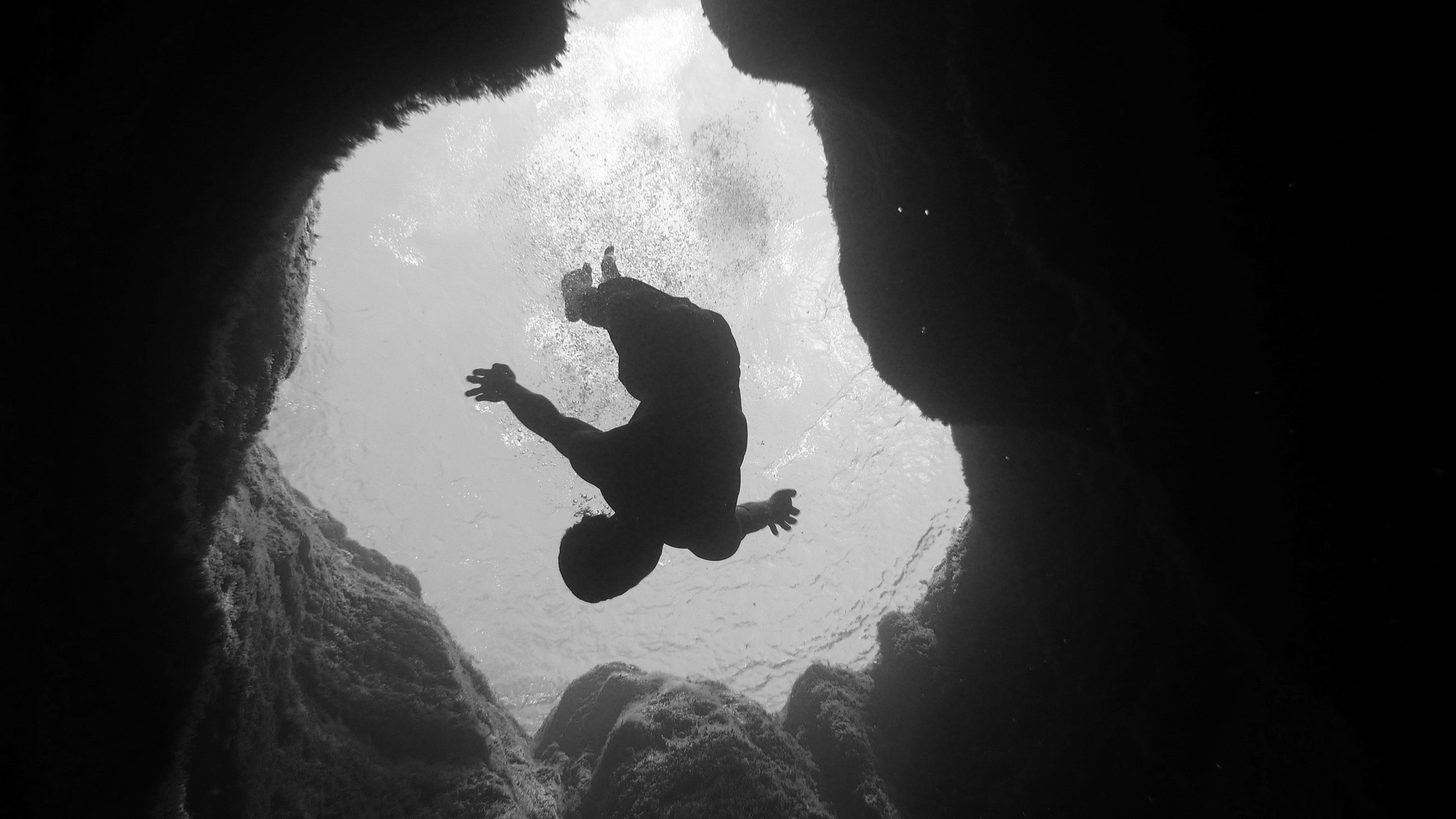
He then made his way out into the yard. He saw the silhouette of his wife in the kitchen window pulling a drag from a cigarette. It was evening, but sweltering hot. He walked to the old well on his property and descended the ladder, into the darkness. At the bottom, he undid the lock and hoisted the wooden hatch. He looked up and saw a narrow circle of the night sky above him, the stars shining brightly like memories. He looked down and saw nothing but blackness. He said one last prayer before diving into the blackness, where the room of light is, to ask his real wife when she died.
It was a half-moon, so half the light, but enough to see the crazy outline of your friends’ faces laugh, pull drags off of their cigarettes, and bemoan the wild actions of their other classmates. It was Friday, a late spring night, graduation was near and there was an air of fervor amongst the class of 2000. The students were partying where they shouldn’t be, at a park called the Black Hole, deep in the Hill Country. Ivory bands of limestone tape the edges of the valley they’re in. Prickly Pear cactus were built with their paws up ready to slap any drunk high school student not paying attention. The juniper is there, just below the mesquite and oak. In the car park there’s a long line of trucks and for every truck at least three pairs of boots. And for every pair of boots, a belt buckle, and for every one of these boys a case of beer and a tin of dip. Kickers. There was everyone else too, the jocks, cheer, the rockers, the skaters, theater, yearbook, etc. everyone was in good spirits at first; everyone felt a connection to each other because high school was nearly over, but the beer began to kick in.
“Okay, here’s the scenario,” Travis Herder stated to his friends, “You’re plane crashes and you’re stranded in the woods. Months go by and no one has come to rescue you. Winter is coming and you’re starving. Your best friend goes off into the woods one day and he dies. What do you do with the body?”
“Well, bury it, stupid,” Courtney Lopez said.
“Wait though,” Travis interjected. “You’re starving, winter’s coming, there’s no rescue insight. God knows how you’re going to survive. Still, do you bury it, or something else?”
“Oh, you’re fucking sick man!” Andreas Bernal laughed.
“Sick as it may be this is survival, man.” Travis takes a big swig from his keg cup and pulls a drag from his cigarette. “Look, we know what the civilized answer is, but when you’re no longer in civilization and you become an animal in the woods, the game changes.”
A girl’s voice from outside their circle said, “Pray for the soul of your friend, wear his neckless as a keepsake, and cut him up for the fire.”
Everyone turned around and there stood Amelia Guzman. One star converse, Ripped jeans, a black slip underneath a Rage Against the Machine t-shirt and a doubled-up nose ring.
Travis loathed her because she was smarter than him and always reminded him of it. However, she seemed to be extending a cannibalistic olive branch, one he gladly took.
“Exactly, exactly. Now, the question must be asked,” Travis smiled, “what part do you eat first?”
“His dick!” Courtney blurted out, already laughing.
“You would,” said Andreas.
The group went into babbling disarray before Amelia chimed back in.
“His heart,” she said.
The group began to laugh again, but when they saw that Amelia was dead serious they unwound like a top losing momentum.
“It’s ceremony. You give thanks by taking his heart, eat it raw, and then move on to the hindquarters to butcher and cook.”
“Holy shit,” Andreas said with a rubber band between his lips, pulling back his hair to tie into a ponytail.
Travis looked at Amelia with different eyes. She was always such a bitch to him; so self-serious and stand-offish, but tonight her curtness rearranged his feelings, and beyond his understanding, he felt some brand of kinship with her. Perhaps it was her unveiled honesty, maybe her Rage t-shirt, or even the fact that under all the layers of angst and eyeshadow he thought she was pretty.
“I agree with Amelia,” he said. “You’ve got to eat to survive, and if ritualizing the act by honoring his soul by eating his heart does the trick, then so be it…”
Kim Stevens stumbled by with a few girls from the cheer squad. They were all wearing Daisy Dukes and formed a perfect palate of pastel halter-tops. “Fucking freaks!” Kim said. She let off a drunken cackle that ricocheted off the limestone crags around the perimeter.
The group of would-be cannibals was silent, all but Amelia who wedged her way into the group. “Kim, you’re just jealous because nobody would eat your anorexic ass.”
“Shut up, you ugly bitch, Cody eats me every night,” Kim said.
“I’m sorry, half of the kickers are named Cody, which one are you going to fuck in the woods tonight?” Amelia responded.
Kim turned around to confront Amelia, but Travis blocked her advance.
“Forget it, Kim,” he said. “You do your thing, and we’ll do ours.”
Travis looked into Kim’s eyes, he’d known her since they were in 1st grade. Her eyes always looked like two beach balls floating in a sea of milk, but the milk had been bloodied.
“You want to fuck her, don’t you?” Kim said to Travis. She began to laugh and lightly slapped Travis on the cheek twice. “Good luck with that one, Trav, she’s clearly a dyke.”
Amelia looked at Travis, but he couldn’t decipher if the look was a look of disdain or a silent call for help.
“There’s just no need for drama,” he said.
“Just go, Kim,” Courtney said.
“We’ll see you later,” Kim said menacingly, her friend pulling her arm to disengage.
“Byeee,” said Amelia.
“Bitch!” Kim yelled with her back turned, already walking away.
The group was silent for a second until Courtney began to laugh. “You straight-up called out Kim for being anorexic, that’s bold girl!” She said to Amelia.
“Fuck that skinny bitch,” Amelia said.
The car park began to empty as more students took the cat tracks down to the river to party amongst the scrub and soapy rocks. Only the moon provided light, a spectrum of subdued blue light that made their eyes turn black and their cigarette cherries glow like lava balls. The group of cannibals stuck together. At Sampson Valley High they were the weird ones. They were the ones that dressed differently, found unheard-of music on Napster and Limewire. They read the Electric Kool-Aid Acid Test and the Yaki Way of Knowledge instead of their assigned reading. They idolized Kurt Cobain and Layne Staley, Jim Morrison, and Lou Reed. Got high to Pink Floyd and Radiohead, and thought about life outside of Texas. Life after Texas. But, here they were, at a Keg, “fitting in,” drinking with the rest tonight to forget about the cliques their class has been cultivating and refining since 6th grade.
“Boo!” Two shadows popped up from the brush. “Ouch, fuck!” One of them said.
“Jesus Christ!” Travis belted.
“Shit, I got bit by a cactus,” Pearl said.
Pearl and Rico attached themselves to the group smelling like weed, cig, and cheap beer.
“Where have you two burnouts been?” Courtney asked, the moon causing her long black hair to look like an oil slick.
“Hiding from kickers and getting high.”
“So, the same as at school?” Amelia said.
“Oh shit, it’s Amelia Guzman!” Pearl said. He pulled something out of his cigarette pack. “Here, I want you to have my roach. It’s a gift of goodwill.”
To their surprise, she didn’t insult Pearl—which was the usual—and instead took it and put it in her own pack of Dave’s lights.
“Damn, son, the girl is cool, right?” Rico said, pulling his bandana headband up so he could see.
“I’ll always take free weed,” she said.
The group descended down, passing random groups of students until they reached the river. It glowed electric and Pearl and Rico stopped talking to trip on it for a second.
“What would you do, Andreas?” Travis asked.
“About what?”
“Would you eat your friend if you were lost in the woods?”
Pearl began to laugh. “Shit, guy, Travis is always on some weird shit.”
“No, I wouldn’t,” Andreas said. “I’d die with dignity.”
“Is there dignity dying from hunger?” Travis said.
“It happened with the IRA,” Amelia said. “My dad told me Irish fighters against England would get caught and hunger strike in prison. A few of them died.”
“That’s fucking madness,” Pearl said.
“I heard there’s a point you can’t come back from, where your body starts to eat itself, you’re not hungry anymore, you’re just a shell of a human waiting for the light to go out, but like in a Zen way, so maybe there’s dignity in that?” Travis said.
They were quiet until a loud yip startled them.
“The kickers are drunk,” Courtney said.
The yips continued as did the refracted chatter of laughter and screams.
“They must be jumping into the Black Hole,” Travis said.
“Man, that place gives me the creeps at night,” Andreas said.
“It’s just a pool of water,” Amelia said. “I’m more pissed about how they’re going to trash the place.”
“I talked to a ranger here once, and he said they come out an hour before opening to clean up all the beer cans and scrub the puke off the rocks.”
“Gross,” said Courtney.
“Fuck the Codys,” both Travis and Amelia said at the same time. She smiled at him and he could have sworn he’d never seen her smile before.
“Love is in the air,” Pearl began to sing while walking away to the river’s bank.
“Shut up!” Amelia said.
Travis turned away to spare her any embarrassment.
They all laid down on the rocks and looked up to the sky. In the distance, their classmates played. But, they were still, contemplative, perhaps all thinking the same thing, “I wish the kickers were gone so we could go to the Black Hole.”
“You know,” Travis said after a moment, “they don’t quite know how deep the Black Hole is.”
“It’s 114 feet,” Andreas said.
There was a moment of silence before the group began to laugh.
“OK, OK, what I meant is that they don’t know where all the tunnels at the bottom of the hole go to.”
“There are tunnels? That’s crazy, man,” Pearl said.
“Yeah, man, divers have died down there,” Travis responded. “Ever heard of Orel Meyer?”
“He the popcorn guy?” Rico said, letting off his high-pitched giggle.
“Naw, naw,” Travis said, fighting off the group laughter. “Naw, he was this diver in the late 70s that went down and was never seen again.”
“Wait, I heard about that shit,” Andreas said. “Wasn’t that the case where they said he must have unhooked himself from his line?”
“Yes, but my dad said that the weird thing was that he was hooked up to a carabiner that had a screw lock, and when they pulled up the line it was screwed closed.”
“What does that mean?” Pearl said.
“It means, stupid, that he unlatched himself and screwed the lock back on the carabiner.”
“That’s weird,” Courtney said. “Why would he do that?”
“Maybe that’s the protocol?” Pearl said.
“Protocol?” Amelia said, “Where did you learn that word?”
“I think on Law and Order,” Pearl said. “My mom and I bond through that show.”
“Cute,” Amelia said.
“It doesn’t make sense,” Travis continued. “That’s the whole thing…”
“HOLE thing, good one, man!” Rico said.
“Shut up, Rico!” Everyone exclaimed.
“There are two possibilities,” Travis said. “One: he unhooked himself knowing he wouldn’t be reattaching himself, or two, he was ripped free from his line. Now, based on how he was hooked up, that would take 400 pounds of pressure.”
They were all quiet until Andreas spoke up. “You’re so full of shit, Travis.”
“No, I’m being serious. Look it up. And, he’s just one of ten divers that have gone missing in the Black Hole.”
“Hey, freaks!” They heard in the distance.
Spooked, Travis stood up and heard a rush of air come at his face and then an explosion detonated. The butt end of a beer bottle hit him square in the forehead. He staggered and fell onto the rocks.
Four kickers, Cody Lawson, Cody Cole, Cody Judge, and Ken Berg ran to Travis hoop’in and holler’in.
“Shit boy, you nailed him right in the forehead,” Cody said.
They circled around Travis and looked at him squirm on the ground like a dying fish out of water.
“You hurt, Trav?” Cody said. “Trav, you hurt?”
“Of course, he’s fucking hurt, Dickhead!” Amelia said, running over to Travis to check him out.
“What the fuck guys,” Andreas said. “Why did you do that?”
“Keep your pants on Maricòn,” Cody said.
“Fuck you, Cody,” Courtney said.
Another one of the Cody’s slapped her and Andreas made an attempt to leap at Cody, but stumbled under the rocks and fell short. He felt three pops land on the side of his head and he tucked into a ball to protect himself.
Pearls and Rico ran into the water waist deep and contemplated swimming to the other side. Amelia picked up a rock, ran over to Ken Berg standing over Andreas, and smashed him upside the head. Just then, her lights went dark, and she fell on her back.
While Ken stubbled about regaining his footing Cody Lawson, the leader sat on top of her, grabbed a hold of one of her nose rings, and ripped it out. Amelia screamed in pain. Courtney began to hit him in the back but was subdued by the other two Codys.
“Come on guys, leave us alone,” Pearl said.
“We just meant to startle you freaks, but Travis stood up into that bottle. Wasn’t our fault, y’all overreacted.”
The codys forced Courtney onto the rocks. She was crying. Lawson, with Amelia’s nose ring still in his hand, straddled Travis to check on him.
“He’s going to have a headache, but he’ll be fine,” he said.
He stood up, walked by Amelia, and threw her nose ring at her.
“Can’t fix this mess though,” he said.
Andreas laid still with his arms wrapped around his head.
“You fucking losers made this way worse than it had to be,” Lawson said, walking away backward.
Amelia picked up her head, a river of blood coming down her face, and screamed, “Get the fuck away from us!”
The Codys and Ken began to laugh and disappeared into the Juniper.
No one said anything. Courtney came over to Amelia’s aid.
“Got out of the water you fucking cowards,” she said to Pearl and Rico.
They complied with their heads down in shame.
“Give Amelia one of your t-shirts,” Courtney said.
“But,” Pearl said.
“Shirt, now!”
Pearl grudgingly pulled off his shirt and gave it to Courtney.
Andreas stood up and began to stagger towards the river not saying a word.
Travis began to laugh. Everyone stopped what they were doing and looked at him, all realizing that they’d nearly forgotten he was hurt.
Travis lay on the rocks, kicking his legs about to control the pain, but his arms spread and still, each hand grasping a rock.
“So much for class comradery,” he said. “I fucking hate this place.”
“Me too,” Courtney said, wiping the blood from Amelia’s face and neck.
“I hate this place!” Andreas screamed at the river.
Pearl and Rico just stood there, bewildered, unsure what they thought, and unsure how to be useful.
We should all move to New York when we graduate,” Amelia said. “Let’s just fucking do it.” She spit blood onto the rocks like she was made a blood pact.
They sat there in silence for some time. Their thoughts stretched between their hatred for home and their fear of leaving. They were in pain, all of them, both physical and otherwise. The night began so well, but it had turned dark. They knew there was always a chance that it would, but they’d suspended their apprehension to come, to have fun for once and be a part of something. But, the fact was they didn’t belong.
Travis slowly stood up and wobbled. He felt the knot developing on his forehead.
“No… no…” he moaned, “I can’t go to school like this.
“At least you didn’t get your nose ripped off,” Amelia said, still with Pearl’s t-shirt pressed against her nostril to control the bleeding.
“At least you’re not a fag,” Andreas said, crouched at the foot of the river.
Courtney walked over to him and gave him a hug.
Travis had an idea to lighten the mood.
“Would you rather eat your friends or your enemies?” he said.
“God damn it,” Andreas said.
Amelia started laughing and sat back on the ground.
Courtney began to laugh too, Travis was such an idiot.
“What the hell are you guys laughing about?” Rico said.
“Oh, you didn’t know?” Travis said. “We’re cannibals now.”
Two hours passed. It was late. One after the other they heard the kickers’ trucks fire up and peel out of the car park. They were waiting for everyone to leave. A couple classmates came down to the river and asked if they were okay. They didn’t look okay but said they were. Soon it sounded like everyone was gone. It was finally safe to go to the Black Hole.
“I don’t want to go,” The shirtless Pearl said. “My pant are wet, I’m hungry.”
“Then walk home,” Courtney said.
“I’ll come,” he said.
Courtney steadied Travis and lead him to the trail. Behind, Pearl and Rico followed. Behind them, Amelia stumbled with a shirt still pressed to her nose.
“I think this shirt is stuck to my nose,” she said. “Thank god I’m drunk.”
No one responded.
Andreas took anchor, he hadn’t spoken since the fight.
Deeper they went into the oaks. The cicadas hissed frequencies beyond their comprehension. The trail leveled out and then rose gradually over a bank. When they cleared the embankment they saw the moonlight sprayed across the Black Hole. Two naked white bodies lay at the side of the pool.
“Fuck, it’s Lawson and Kim,” Courtney said.
“I’m seeing four of them, must be an orgy,” Travis said.
“Shhh…” Amelia said.
“Are they boning?” Pearl asked.
“Shut up, Pearl,” They said in unison.
“Follow me,” Amelia said, ripping the t-shirt from her nose.
Before they could discuss, she was gone. They looked at each other, silently negotiating who was going to respond first.
“Let’s go,” Travis said.
They quietly made their way down to the brush beside the dark swimming hole.
Kim and Cody stood up and began to make out. Their slender frames intermixing in the blue night. Their white skin reflected the moon and Amelia watched them in disgust. The rest of the gang arrived, each looking at each other and then at the prom king and queen to be, necking each other, ready for another go.
“Fucking gross,” Courtney whispered.
Kim stopped and looked around.
“Did you hear that?” she asked Cody. “Hello?” she said, covering her breasts.
“Get a good look!” Cody said and grabbed Kim to resume what they were doing.
Travis looked at Amelia biting her bottom lip and he realized what was about to happen. Amelia left and made her way forward under the protection of the brush. She finally stopped ten feet from the unknowing pair. Then, like a silent assassin, she made her move and rushed them. They were so startled they didn’t know how to react and with all her might Amelia crashed into their naked bodies and sent them into the hole. She sent them so far across the pool that she heard to dull knock of one of their heads, or both, hit against a rock on the far side of the pool. She picked up a rock and waited for them to surface, but they didn’t…
Kim and Cody both hit their heads against something as they made their way to the surface. It was made of wood planks and covered the opening to the pool. It was pitch black, the water was intolerably cold, they struggled to keep their faces above the water.
“Cody, Cody,” Kim pleaded. “Cody, what the fuck is going on?”
They began to bang on the wooded slats. Kim was tearing at them with her nails until they began to break and bleed. Cody used his shoulder to rupture the wooden lid, but it was solid like concrete. Kim continued to scratch the wooden lid and began to tire.
“We’re going to fucking die,” She screamed.
“We ain’t going to die,” Cody said.
Several minutes had passed and the two were exhausted. Kim’s head was barely above the waterline and Cody felt his cowboy strength wane.
“Where the fuck are they?” Andreas said.
“I think they hit their heads,” Amelia said.
“They wouldn’t sink though,” Travis said.
“Oh my god, I fucking killed them,” Amelia said.
“How long has it been?”
“Over five minutes.”
Holy shit, what’s going on?” Travis said.
In the distance, they heard voices and the diffused glow of flashlights were arriving from the other side of the embankment.
“We have to go,” Courtney said.
“No, we have to help,” Amelia said.
Travis grabbed Amelia’s hand and she shook it off, but Travis didn’t back down.
“We need to hide and see what happens.”
He pulled her away and they fled.
“Cody, I can’t stay up anymore,” Kim said. “Cody… oh my God,” she gasped and slipped into the blackness.
“Kim!” Cody shouted, “Kim!”
He dove down for her, but her body was gone. He labored back to the surface and hit his head on the wood planks. He began to cry and expend what little energy he had left on breaking the wood planks overhead. Soon after he tired. He was scared, not wanting to die, still baffled by what had happened. How did they end up somewhere else? Now, only his lips were above water, as his arms and legs began to go numb. He labored, pushed for more strength, channeled the will to live into his movements. Finally, he succumbed to the water and he sank below the line of survival.
The other Codys and Ken came back with more beer and investigated the scene. They saw Cody and Kim’s clothes, but no Cody and Kim.
“They must be at it in the woods,” Cody said.
“Freaks,” Cody said.
They laughed and cracked their beers.
The young cannibals watched from afar with the horror of knowing that something bad was happening, something they couldn’t take back. Then, Amelia saw it first, she saw Kim’s body subtly bubble up to the surface. The kickers hadn’t noticed yet; they were too busy and drunk. But then Cody Lawson’s body sprung from the water like a jumping fish and landed face down in the water with a crash. Ken spit out his beer and looked at the bodies of his two friends floating face down in the Black Hole.
“Cody, Kim!” The gang heard them yell, but no movement.
The Cody’s jumped in to retrieve the bodies and Ken dragged them to the rim of the hole.
They slapped Cody, tried CPR, and frantically paced around the king and queen.
“We’ve got to get the police,” Ken said.
The three boys took off through the twisted oaks and disappeared, leaving the dead where they lay.
“We’ve got to get out of here,” Travis said.
“Yeah, we need to go,” said Andreas.
Amelia stood up and began to walk to the pool like she was in a daze.
“I’m going with her,” Courtney said.
She took off too and after a moment of the boys looking stupidly at each other, they followed.
Amelia stood over Kim’s body. She looked into those lifeless blue beach balls and felt deep remorse.
“I didn’t mean to kill them,” she said. She began to shake all over.
Courtney grabbed her as Travis knelt down beside Kim’s body.
“Look at her hands,” he said.
They saw her nails nearly ripped off and blood puddled below them. Travis went to Cody and noticed his hands were swollen and that his shoulder looked like it was out of its socket. Cody’s eyes were open and his face looked like he died in terror.
“We’ve got to go before the cops get here,” Rico said.
“Yeah, not trying to be gay Mexican in this mug right now,” Andreas said.
Courtney tore Amelia away and Andreas did the same to Travis.
“What’s going on here?” Travis said. “This doesn’t make sense.”
They first checked that the car park was empty and then piled into Andreas’s parent’s Buick. The band, Hole was blaring from the speakers.
“Turn that shit off,” Travis said.
Andreas ignored him, peeled out, and floored it through the country roads towards the highway. As they neared HW561 they could see a line of colored lights flicker in the distance.
“Hurry, hurry, let’s fucking go!” Pearl said.
They turned away from the lights and they watched behind them to see if they were going to be followed. As the lights neared they collectively held their breath. The lead car turned right and the rest followed. It was just the Buick on an empty road.
Amelia was weeping in the back seat with Courtney’s arm around her. Rico was sitting on Pearl’s lap and whispered if they should ask Amelia for the roach back.
“No,” Travis said from the front seat, ending that idea before it got too far.
Andreas was keeping the ship steady but rocking back and forth. No one was talking, they were all stuck in a nightmare, caught in some loop of choice and consequence. Finally, Travis said something.
“We need to make a plan.”
“How about a fucking time machine,” Andreas said.
“I’ve got to turn myself in,” Amelia said. No one responded. “I got us into this, I’ll face the consequence.”
“Wait a minute,” Travis said. “Did you see their bodies? Did you see Kim’s hands and Cody’s shoulder?”
“Not closely,” Courtney said.
“Her hands looked like they were shredded on a cheese grater and Cody’s shoulder was out of its socket.”
“What?”
“I don’t think you killed them, Amelia. I don’t know what but something else happened.”
“Now’s not the time Travis,” Andreas said.
“They looked like they were beating on something, that’s all I’m saying,” Travis said.
“He right,” Amelia said. “They were all fucked up when I looked at them.”
“They hit their heads and drowned,” Rico said. “Enough said.”
“I looked at their heads,” Travis said. “I saw a bump on Cody’s, but nothing bad.”
Andreas turned onto FM1086 and drove down the center of the road.
“Well, what happened then, Travis?” he asked, appearing to lose his cool.
Travis hesitated. “I don’t know, but what I do know is that we have to know for sure what happened before any of us turn ourselves in.”
Andreas pulled the car over got out and sat on the hood.
Everyone else waited for the other to make a move and Rico was first because he was sick of sitting on his friend’s lap. The rest followed. Travis passed out cigarettes and they sat in silence for some time.
“How long did it take for the bodies to surface?” Andreas said, looking up at the stars.
“More than ten minutes,” Travis said.
“Could have they gotten those injuries falling in?”
“I doubt it, her fucking nails were ripped off and filled with a bunch of black pulp.”
“And, you’re sure Cody’s arm was out of its socket?”
“I’m sure,” Travis said.
“Okay,” Andreas said. “I believe you, but what are we supposed to do about it?”
“We keep a secret and go to school on Monday,” Amelia said.
They turned to look at her. She appeared hardened. Sure of the plan.
“We tell the whole truth until the moment we went to the Black Hole. We say we just stayed by the river. People will know we got jumped by the Codys and we don’t deny it. We’ll say that we hiked all the way to Murchinson’s Turn and looked at the stars until the beer wore off.
“Why?”
“Because the last cars in the parking lot were ours, Lawson’s and the Codys.”
“We have a motive,” Travis said, but we’ll have to stick to our stories; maybe the Cody’s didn’t even notice the Buick was yours, Andreas. But, to be safe, you can’t drive it to school or to parties anymore. I’ll drive.” Travis said.
A coyote howled in the distance.
Courtney began to laugh, “If I had to choose who to eat, I’d choose my friends,” she said.
They all looked at her and knew exactly what she meant.
Andreas began to cry on the hood of his parent’s car because his feelings of guilt had transferred to a bigger mystery. Adulthood.
I’ve been craving tiramisu on the regular. How can something be perfectly wet? Every night I feed the cats and then crave tiramisu. The thought is forming into a habit. This happens with a lot of things. I have an arsenal of revolving obsessions. About once a year I go through a soccer phase, where I watch and play as much as I can. There’s a vinyl phase, where I want to cultivate and expand my record collection. A hat phase, a short window where I want a fedora of some kind to brush and model. A hiking phase, where I want to disconnect and focus on the connection between my heartbeat and the mountain breeze. Finally, a calm phase, where I don’t need to occupy my time with anything in order to distract myself from my anxiety. This reprieve is my favorite time of year. It’s the moment where I’m able to fully function and engage with others. It’s short-lived though, as it lasts as long as spring bloom. It’s a moment where I can read without distraction, listen to people without wondering off inside my own head, sit still and enjoy the present moment. I become who my parents wanted.
I don’t mean that to be mellow dramatic, rather it’s meant to point to the archetype of a happy child that every parent wants their kid to grow up to be. However, sometimes things take on their own shape. It’s just a fact, we can’t help how events reshape us. That’s why childhood photos of ourselves look all the more foreign the older we become. I remember talking to my grandma about aging and she said you become wiser but have less people to share it with. In the end all her friends were dead. I think, I don’t even have kids. How is my life going to look when the people in my life fade into the trees. I can say to the wall, I was one way until my divorce; I was this way until I stopped drinking; I was solid until my mother and father died; I was anchored to something until my wife died; I was okay until my chess partner at the senior center had a stroke. I am formless without anyone I knew available to lend me the signification I need to make the events of my life make sense.
Meaning is not solely made in the mind, but curated by the contact and memory of others. I suppose my anxiety is having exposed the truth that dying can be a family affair, but is commonly a solitary process. I want my life to have meant enough that my name is used for a while when I’m gone. Anything to stave off the slip into mortal obscurity that’s inevitable.
My cake phase will give way to a new preoccupation, but I’ll be thinking of other things.
Kyoto’s a steam room with a broiler for a celling. I’ve been to Arashiyama and somehow beat the crowds to bury Franny’s kerchief amongst the tall bars of bamboo. Sweat dripped off my brow and when I was finished I felt like I was one step closer to Franny’s death. I sat by a gem green river for a while wishing I had more control over what’s going to happen. I feel powerless and it’s distressing to know things beyond my control are on a collision course. I avoid a small Shinto shrine near me by the water’s edge because I’m not sure what to believe anymore. I decide to leave the forest and find food and air conditioning.
I’m still in Arashiyama, near the bamboo forest, at a small sushi restaurant. It’s a square shop barricaded with gridded paper screens. I’m sitting at a bar and next to me is a Japanese man wearing traditional Japanese clothing, which I assume means he works in the tourist industry. He’s pushing fifty. Freckles are chained underneath his eyes. His hair is greying. He’s lean and fit, and also oddly content to not have his food yet. He’s not reading on his phone, nor checking on a social media update. He’s simply staring forward, lost in his thoughts. Then, without turning to me he says, “Ahi tuna sushi is very popular in the States, but have you tried Yellow Tail? Now that’s a treat.”
“I have once,” I say. “But I’d had too much sake beforehand to properly taste it.”
“And today, too many cigarettes and Oi Ocha,” he says.
“He turns to face me and I see that he’s blind.”
“You’re right, can you smell it on me?” I say.
“As soon as the door opened and you entered. American. Smoker. Iced tea.”
“I hope it’ll not spoil your taste,” I say.
“No, but thank you.”
He remains turned towards me and seemingly hyperaware of my movements. As though, he can hear my eyes move and my facial expressions crane. He chuckles and turns back. He says something to the sushi chef in front of us and the chef looks at me briefly before continuing his work.
“I told him to not service you with the best fish because you’ve spoiled your tongue today,” he says, chuckling again.
I’m a little confused about how to receive this news, but I remain a keen participant.
“Maybe, that’s a good idea, I wouldn’t want him to waste his best product.”
Now, the blind man laughs.
“You’re not your average American,” he says. “Somewhere close to Canada, but with a Westcoast accent. Seattle, it must be. Yes, your restraint matches there as well.”
“Good guess,” I say.
His smile snaps shut and he says gruffly, “It is no guess.”
“My apologies.”
He loosens up again and smiles.
“Would you share a tokkuri of sake with me?”
“Yeah, sure.”
The tokkuri soon arrives and we clink plates.
There’s an awareness to this man that defies explanation. He’s the one who grasped the tokkuri, he’s the one who pours the sake, he’s the one who clinked his sake plate onto mine. If it wasn’t for the fact that I can see his eyes rolled back inside his head, I’d have said he was a liar. Both of our meals come at the same time and we eat.
I mash a mound of wasabi into a pool of soy sauce and separate the leaves of pickled ginger from one another.
“That’s a lot of wasabi,” he says. “You like intense tasting things.”
“I suppose so,” I say.
“People who like intense tasting things are intense thinkers.”
“My thoughts are usually quite loud, can you hear them?”
“Yes,” he says, but then looks away and continues to eat.
“I hope I didn’t offend you?” I say.
“I was sure I had offended you.”
“No, I’m just unsure of your intensions, that’s all.”
He laughs and says, “My name is Akira.”
I introduce myself and we shake hands.
“Tell me, what tragedy brings you to Japan,” he says.
“How do you know that?”
“Because your demeanor is heavy and I’ve been around it enough to know when I sense it.”
“I wouldn’t want to bother you with it,” I say.
“You’re right, I’ve been rude,” he says, “it’s just that I don’t speak to many people, especially Americans from Seattle.”
I hesitate, something’s strange about this man, but to his defense, something has been strange with me since I arrived to Japan. Perhaps it’s not a bad idea to humor him—what’s the worst that could come of it?
“My brother is dying in Nagoya,” I say. “And, my mother is dying in Seattle.”
“I’m very sorry,” he says. “Is there anything I can do?”
“If you can ease their suffering and make it quick, I’d be much obliged,” I say.
“Of course,” he says and lifts his plate to toast.
“Well, that was easy,” I joke.
“You never know who you’ll run into at a sushi bar in Kyoto,” he says, chuckling.
The sushi chef looks up at me, then to the strange blind man, and then back to his fillet of tuna.
“Do you believe if two family members are dying at the same time they can bind to each other, and one feel the pain of the other?” I ask.
“It would take strong feelings to make something like that happen, but people don’t think like that anymore,” he says. “In old times if one person was showing the symptoms of another patient and visa versa, that’s what they’d think. Why do you ask?”
“It’s nothing,” I say.
“You find yourself thinking things you’ve never thought of before,” he says.
“Perhaps,” I say.
The man brushes his hand across the thick black cane resting beside him on the bar and smiles.
“We seek answers when there are none.”
“I’m just confused about what’s happening to me,” I say.
“Intense thinking leads to intense emotions,” he says, with his mouth full.
“Are both your mother and brother intense thinkers?”
“I’d say so.”
“Then the idea of their connection will be intensified by their legacy.”
“I don’t follow?” I say.
“When you ponder one, it will match their intensity, but if you ponder both the intensity is quadrupled. It sounds like they might be working out their past with each other. You must figure this is more important than their deaths.”
“So you do believe they might be bonded?”
“They are mother and son, of course they are, this isn’t magic.”
“I know, I—”
“You must sleep more,” he says. “Things won’t be as confusing if you sleep.”
I nod feeling as though this man is reading my thoughts.
We eat some more in silence, joke around a bit, and Akira tells me of some of his favorite shrines in the city. “From the train station you must walk to Fushimi Inari-Taisha,” he says. “When you arrive you must then walk through every gate.”
“I will,” I say.
He comes in close to my face.
“I mean it,” he says. “Inari is fickle and quick to anger. Every gate.”
“I understand.”
“You seem like a good person, let the shrines cleanse you.” He turns his head around as if he’s hearing something far off and trying to identify where it’s coming from. “The rest of this sake is for you,” he says. He stands up, slips on a red yukata and grabs his cane, which looks more like a katana sword’s saya, and says, “I have a tour group to lead, I need to be sharp.”
“Of course you do,” I say, “Arrigato. Thank you for the advice.”
He bows and says, “It was a blessed chance encounter.”
He leaves. When I’m finished I ask for the bill. Akira’s meal is on the ticket. The extra sake softens the blow.
***
I could have taken the train to Fushimi Inari-Taisha, but instead I stabbed the hot concrete for an hour to get there because I didn’t want to deviate from Akira’s directions. I’m sweating profusely and out of Oi Ocha. I arrive to the great shrine of Inari and find that it’s a mountain. The old man made me walk all this way to the foot of a mountain and now I’m supposed to climb it. I begin snaking my way through crowds of tourists until I arrive at the first gate. It’s a large red gate comprised of two thick pillars called hashira holding up a two pieced lintel made up of a lower beam called the nuki and the crown called kasagi. I know this because I read the sign below it. Passing through it, there’s no other way to go, but up, so I remain with a large mass of hikers and climb the pathway.
Every several feet there’s another red gate. I turn a corner and look up to see a long train of gates stapled in a row up the mountainside. Like a dog, I want to run through all of them, but I’m frustrated because there are too many people in my way. However, the further I climb the thinner the masses become, but the more exposed I am to the hot sun. My shirt is soaked now, and my legs are beginning to burn. My pack is barely full, but it weighs a ton.
With each gate I begin to feel weaker, but I’m too hard-headed to stop. I feel as though I’ve been summoned to the shrine because there’s some meaning up there for me. I continue up. Soon, I pass through each gate alone. In between, tourists pass me and give strange looks. I ignore them. I’m weak and thirsty, uncharacteristically so, more than I should be and I wonder if something else is the matter with me. I tell myself, the struggle is part of the process, that this is a test of spirit. Akira told me to do it this way to challenge me. I accepted the challenge and I intend to finish it. I trudge on, the sweat on my skin makes it appear oily and iridescent. My mouth is as dry as a desert. My skin feels like it’s cracking like baked mud.
After an hour and a half I stumble to the top of Mt. Inari and I’m greeted with statues of foxes. I find a bench and sit. I feel as though I might be sick, but I concentrate on my breathing. I concentrate for so long that I stop thinking, and no longer thinking I stop remembering, and not remembering, I feel groggy. I fall asleep on the bench and remain there for some time. When I awake it’s night. Someone set a bottle of water by my head. I sit up and my head drains an ocean out from it and it feels as though all my hair could fall out. There are other people up here, so I’m not alone; I’m just surprised I wasn’t bothered by anyone. I drink the bottle of water in one go and try to stand up. I totter a little and realize the sun baked the energy out of my body. A group of University kids are laughing. One asks, if I’m alright, and I say too much sun, and they laugh some more. I’m not offended, because I’d think it’s funny too. I begin my descent, knees knocking all the way down, each gate reminding me I accepted a strange challenge with zero benefit. That’s yet to be determined, and all I should concentrate on is getting off this mountain to buy food and water.
I reach the streets and I have just enough phone battery to find my hostel. When I arrive I’m so happy to find Midori booked me a private room. I go to the bar and people from all over the world are partying. I order a hamburger and eat the whole thing in two minutes. I drink only water and I keep drinking glass after glass. During this whole process of recovery, from the foot of the mountain to the hostel bar, I’m not thinking and still not remembering. I just want food and water. I’m a machine for once and I’m happy. I eat and drink, resting in the total present, not taking on any responsibility, not administering guilt, nothing. That is until I receive a message from Midori.
“No time to discuss, you need to come home now. I’ve purchased a new train ticket for you. Can you be at the station in fifty minutes? Only answer if you cannot. Attached is your ticket.” [Text Message, Midori]
***
I get lost trying to locate the Kyoto train station in the dark, but I follow the Kyoto Tower and eventually find my way. I have a little time to spare so I order an iced coffee at Starbucks, and the teller can’t understand me. Finally I say, aisukōhī and she says, ohhhhhh, aisukōhī. Go fucking figure, if it’s not one way, it’s the other. I take out my change purse to pay her and I swear the coins pass though my hand. They splash across the counter and go everywhere. I pick up what I can and leave what I can’t see. I get to the train deck and step onto the Nozumi headed for Nagoya. It’s late, but there are still people on board. I have the isle to myself though, or at least an empty seat for Inari.
Something is following me or at least playing tricks on me. I have no proof, but ever since I nearly broke Franny’s feet, I’ve felt distressed. I’m losing it and I know it, but I’ve got no other choice than to remain on the road I’m on. I know it’s leading me to Franny’s death bed. It’s happening so fast, too fast. Franny’s never been the same since the seizure. I should have known then that he’d die while I was here. Even if I did know, nothing can prepare you. Soon, a brother I never really knew is going to die. I’ll be left putting together a puzzle of his image for years to come. But, the more I try to rebuild him, the farther away his true image will get.
I suppose that’s why I came here, to give it one last try to understand Franny and why he was the man he was. I figured if I put myself in his shoes, met his friends, and went to his haunts I’d know who he was. But, I’m no closer. Perhaps I’ve put too much into it, and pushed too hard to come to grips with a man that was rarely available, and certainly always gone. Selfishly, I’ve wanted more, too much, more than one life can give another. Still, I wish Franny was capable of being there for me because I’ve known this whole time he has what I have in my head. When his friends speak about his intensity, his creativity, his insatiable hunger for mood altering substances, I feel a profound force of empathy rumble though me. It makes me afraid to watch how he’s dying because I can’t shake the feeling I’ll succumb to the same fate. If not worse. I want to be more than that, but who I am won’t let me. Stability is a dream I’ll never acquire. Happiness is a fox hiding within a shrine.
Franny never found it, but he was so focused on his pain, how could he be? It’s such a shame mom and him are going to die together without seeing each other a last time. I wish Franny could have forgiven mom for her mistakes and that mom could have had a chance to ask for forgiveness. But, I hate Franny for hanging that over mom’s head, Aja too. At least Aja came to help out, but Franny did the Franny thing and went ahead and died.
Soon, I arrive at Nagoya Station and take the subway to Nagoya City University Hospital. There are barely any commuters, all is still and calm. I arrive Inside the hospital and a young man wearing a red Adidas track coat sits on a bench muttering to himself. He sees me and begins to speak in Japanese. He’s drunk and unhappy. I can’t understand him. I ignore him the best I can the take the elevator up to oncology.
Midori sits next to Franny’s bed holding his hand.
“Robbie, You’re brother is dying,” she says with tears down her face.
“I know,” I say and I sit on the other side of the bed and grasp her hand from across Franny body.
“I shouldn’t have gone to Kyoto,” I say.
“You couldn’t have known.”
“I feel so badly about what happened, I didn’t mean to hurt him,” I say. “If he was going to die I didn’t want our last words to be angry.”
I felt Franny’s hand squeeze mine and my whole body reacts.
“He squeezed my hand,” I say.
“Now your last words aren’t angry words. He talked to me about you last night,” Midori says, wiping her face. “He said he was worried that you dislike him,” she says.
“Of course I don’t. I love you, Franny,” I say to him.
“He said, he wishes you two talked more, that he had things to tell you.”
“I think I know what they are,” I say. “They’re things I have a hard time talking about too.”
“Robbie,” Midori says. “I’m sorry I took Franny away to Japan. I took him away from your family.”
“No, don’t think that, he needed to leave,” I say.
“I think he was happy here,” she says.
“He was happier here than he ever would have been in Seattle.”
“I hope so.”
We hold on as long as we can, but both of us fall asleep beside Franny’s bed. My dreams are troubled. Dying dogs, a Shinto figurine laying waste to the city. A homeless man set on fire. My mouth propped open with a dental gag and fish dropped in. Headstones regurgitating living skeletons like a bellowing smoke stack. An empty bed frozen solid. These images repeat themselves.
I’m roused by sobbing, and when I open my eyes I see Midori looking at Franny and by the pain in her voice I know my brother is dead. His mouth is open, his skin is yellowish grey, he’s more emaciated than before, he will be cremated soon.
“I love you, brother,” I say, and console Midori.
I look up, and behind her stands Franny.
“I’ll explain later,” he says, in usual fashion. “Just help Midori as much as you can before we leave for Seattle. In the meantime, I have a blind man to thank.”
My heart sinks because I know now this is all inside of me.



 Ink To Stone