Unknown's avatar

Posts by Josef Alton

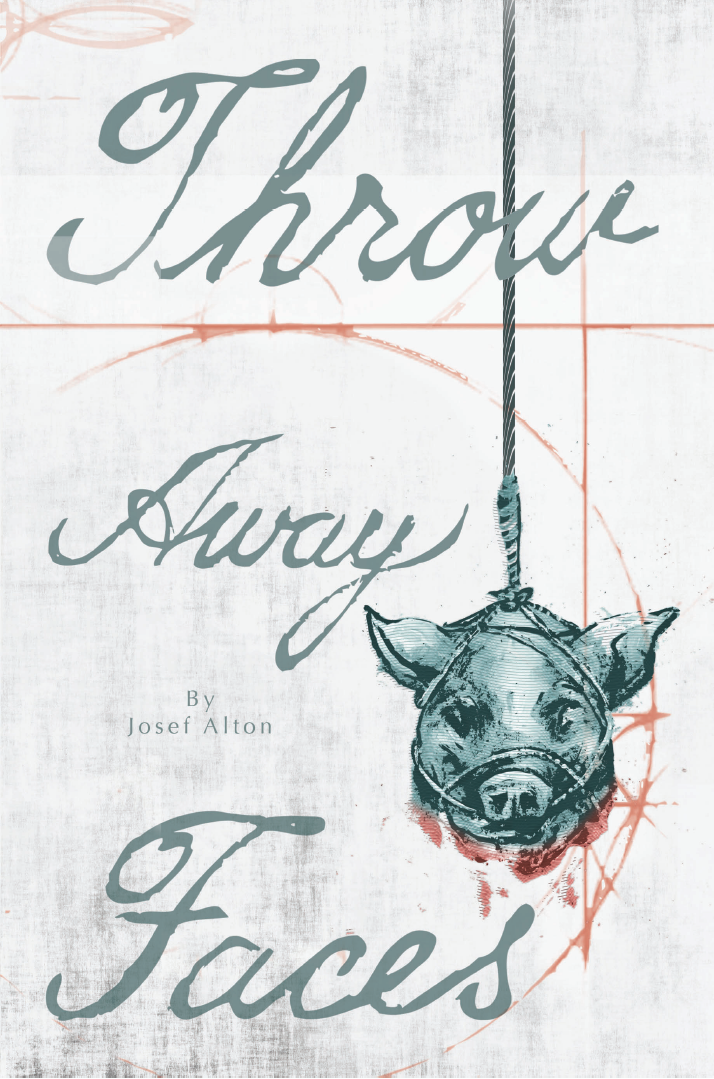
Creative and non-fiction writer. Novelist, author of Throw-Away Faces (1/2019). Traveler and thinker. Baseball lover.

Blossoms and Ashes: Human +1, Part 2

Human +1

My shoes are off and I’m seated at a low standing table on a raised bench with aching knees smoldering underneath. There are framed impressions of red hand prints covering the walls—they’re the hands of sumo wrestlers who have come to eat chicken wings At Fry Bo in Gokiso. I’m with two of Franny’s film director friends and we’re drunk. The college kids around us are also drunk. The grandma who owns the restaurant is wrapped in an orange kimono and pegged with wooden sandals, and she might also be drunk. She sees me fussing with a chicken wing and begins to tell me off in Japanese. Franny’s friend George begins to laugh and says, “She says you’re too apprehensive and must treat the wing more like your girlfriend.”

“That’s a pretty weird thing to say,” I say.

She grabs a wing from my plate and holds one end in front of my mouth. She says bite it and I do. She turns the wing around and says to George, tell this silly man to put the whole wing in his mouth and slurp it clean. George tells me what she wants me to do and I do as I am told with most of the restaurant watching and laughing as I do. She does one more with me and together we throw the empty bones down on my plate like we’re rolling dice on a concrete stoop.

“Sake,” I say, and everyone laughs. My new grandmother yells for sake and then leaves us.

George is about my size, late 40s, kind-faced and gentle. Ryan’s a bit larger, African American, hairline as even as a fence line. He shaves every day and looks up from the sink to a set of grey eyes. He says to me, “Some people wait for years and never receive a Japanese grandma, but you got yours in your first week.”

            “The ignorant shall always win your treasure,” I say.

            “Sounds like a proverb,” George says.

            “I just made it up.”

            The sake arrives and we fill our plates with the chilled liquid and drink. I love the feeling I have right now. Despite not sleeping the past three nights, I’m great. Being somewhere else has me on a high. Being drunk with English speakers in a foreign land reminds me of my traveling days and I don’t want to stop.

            “What are you writing right now?” George asks.

            “How do you know I write?”

            “Franny says you’re published.”

            “I’m not writing right now,” I say, feeling that George is ruining my reprieve from worry. “I’ve been blocked up the past year.”

            “I hate that,” Ryan says. “When I get writer’s block I get depressed. Then I’m stuck in a vicious uncreative loop.”

            “I know what you mean,” I say. “Better than you know.” I add, inaudibly.

            A university student approaches our table and in English he asks if he can speak to us for a few minutes. He begins to tell us that he went to college in Georgetown and Cambridge. How he’s back in Japan to become a doctor. He tells us how much he loves the States and how thankful he is for letting him practice English with us. I find the whole exchange remarkable. He speaks to us with a reverence I don’t feel we at all deserve. That being said, and despite his over use of respect, I can’t help but to reciprocate respect for him in exchange because his journey abroad must have been a difficult one. He asks for a picture with us and then departs to rejoin his friends.

            “That happens a lot,” Ryan says, slurping down another hot wing.

            “Strangers asking you to speak English?”

            “Yeah, It’s pretty cool but can get a bit tiring.”

            George switches the subject.

            “What’s up with your brother, something felt off at the hospital today.”

            “He had a seizure a couple days back,” I say.

            “shit,” Ryan says.

            “Since you guys are his friends and I know how hard it is to get the truth in terms of his condition, I’ll let you know that I heard from the doctor that his case is terminal and the cancer has spread throughout his entire body. He’s tanking.”

            Grandma approaches with another tokkuri of sake and fresh plates. It doesn’t escape her that the mood of the table has changed. She sets down our sake and silently departs.

            “It’s bad luck to say bad things out loud because they might come true,” George says.

“I know it feels wrong, like it’s lying, but try and get used to it.”

            “I get it,” I say. “There’s a ton of shit I’ve said to myself that’s come true only because I said it.”

            “Like what?”

            “You’re a piece of shit. You’re a bad writer. You’re a fraud—entertaining that kind of poison gives it legs. In short, I get how rejecting the assertion that you’re going to die is essential to focus on healing.”

            “But, do you believe that?” Ryan asks.

            “I can entertain it, but in terms of myself, I doubt I could ever keep things civil with myself for that long—I’m always at my own throat.”

            George laughs. “For having writers block you sure have entertaining stuff to say.”

            “We’re all drunk,” I say. “It’s an illusion.”

            “Your brother’s the same way,” George continues.

            “Man, he can be the funniest guy in the room with enough energy to go all night,” Ryan says.

            “But sometimes, he could be the angriest drunk at the bar,” George adds.

            Ryan looks slightly surprised George went there, but I seize the chance to ask.

            “Was he up and down a lot, like you never knew which Fran you were going to get?”

            “I’d say so,” George says. “But, usually, once he was intoxicated, he’d perk up. He could be cruel though, but he could also be passionately gregarious, it really all depended on the day.”

            “He’s a man of excess,” Ryan added. “But, the fucker can act and hold a room.”

            “Excellent actor, carries his lines well, knows how to act outside the spotlight. His joy and confidence on stage makes other actors feel comfortable. He was guilty of stealing scenes early on, but he learned quickly,” George adds. “Very much meant for the stage; film was touch and go for him, but he got a high acting on stage.”

            There’s a pause and Ryan has a look in his eye like he knows why I’m asking about Franny.

“Your brother’s definitely bi-polar, he even told me so,” Ryan says.

            “I’ve heard that too, but I’ve never spoken with him about it,” I say.

            “He has his secrets doesn’t he?” George says.

            “More than any of us can know.”

            “You must yourself though? Apple doesn’t fall far from the tree,” George says.

            I’m not taken aback by George’s assertiveness; in fact, he’s giving me an excuse to talk about myself, which when drunk, I love to do.  But, for some unknown reason I can’t tell them the most obvious, that I’m bi-polar too. The words form a brick in my mouth and all I can say is that it runs in my family.

            “My brother’s schizophrenic,” George says.

            “My father used to disappear for days at a time,” Ryan says. “Turns out he’d go for these massive walks around Minneapolis and stay in motels. He later said, once he got on lithium, that he was trying to out run the bug.”

            I think about the bug and want more sake and another cigarette.

            “Is he better now?” I ask.

            “He killed himself a few years back when I was away at college,” he says.

            “I’m sorry,” I say.

            “Don’t be, I’m only direct about it because it’s not an illness to tiptoe around,” he says, examining my body language.

            “Some bad baggage comes our way,” George says.  

“What do you mean, George?” Ryan asks.

“Well, look, two of us are directors and all three of us are writers. Franny’s an actor and writer. We’ve all come clean about our family history, so it’s more or less obvious we have our own beef with mental illness. Countless other creative people I know have the bug as you say. It’s hard to not think that creativity and mental illness are linked, like you can’t have one without the other.”

            “Creating stories is the process of unpacking, that is, if we’re to continue using the baggage metaphor,” I say.

            “I like it,” says George.

            “And the craft is in the details of how you re-fold it and put it away,” says Ryan.

            “I can drink to that,” I say.

            We polish off another tokkuri of sake and order another. It arrives and we make a toast, this time to mental illness. It feels stupid though, or maybe I just feel dumb for not talking about my diagnosis. Maybe it’s because I feel so good right now, so confident and inspired to go wherever and stay up as long as I want. I rarely feel this good, rarely do I have energy like this. I feel like I’m a normal human being for once, but a smidgen more so, like a human +1. It’s hard to admit I’m supposedly bi-polar at a time like this. Not when I feel invincible.

            “Are you alright?” George asks me.

            “I’m great, why?” I ask.

            “Nothing, you just seem a bit agitated.”

            “I’m just feeling the alcohol,” I say.

            “Do you want to go to Fran’s favorite bar after this?”

            “Yeah, I would,” I say.

***

            I’ve vomited already, but luckily brought a travel tooth brush and toothpaste in my bag. I look in the mirror and see a sick clown struggling to keep the show going. I’m at an ex-pat bar called the Black Rock. It’s very much in the English Pub style, but adorned with Australian flags, photos of the Aussie rugby team, and several posters of Crocodile Dundee. I splash my face with water but the room is still moving. Eventually, I find my footing and rejoin the crowd.

            I’m at a table with a group of directors, actors, postgrad students, and random English speakers who come here to take a break from the Japan outside. They all know my brother for better or worse. No better than George.

            “I remember when Franny first moved here and picked up his first acting gig as Captain Morgan. It was perfect for him because he got paid to dress like a pirate and drink. He’d walk into bars with a group of models, pose for pictures with people and take shots with them. It was always mayhem.”

            “Until he fell down a flight of stairs and broke his leg,” Meikko says. She’s American born, but grew up in both worlds. Her hair is dyed platinum blond, she’s nearly as tall as me, and an illustrator here in Nagoya. She’s married to Ryan, but older than him. It’s impossible to decipher how old she is, but I’m guessing early 40s.

            “He went to go pee,” she laughs, “and his peg leg went out from under him and he ate it down the stairs.”

            “He broke his leg,” George cut in, “which was terrible. A couple of days after the incident though Franny showed up at the bar on crutches and wanted to continue playing Captain Morgan. He tried to convince the reps he could act the part while sitting down, but they didn’t go for it and neither did Midori.”

            “I remember,” Ryan reminisces, “the time he showed up to the bar with a pair of Japanese newlyweds wearing Western wedding garb. White dress, veil, tuxedo, the whole nine yards. He’d just gotten a job as a western wedding officiator and had such a good time with these newlyweds he invited them, and their friends back to the bar. The bar owner here, Al was trying to get out early that night, but instead hosted a wedding party all by himself. He made a killing that night, but told Fran off for it. Franny just smiled at him and said he wanted half the profit. Fucking priceless.”

             They continue laughing and telling stories about Fran and I’m trying my hardest to concentrate, but I cant. I excuse myself to have a cigarette and walk out into the warm night air and neon lights. I’m not seeing double, which is good. I look at my phone to catch up on some messages.

            “Hey brother, I’m with your friend Dana. We’ve been going to Goth bars and talking about Super Hero movies. Anyway, you’re cats are fed and in good hands, enjoy Japan and get a hand job, I mean Kimono for me lol.” [Message from Kimono Greg]

“Hey dumb ass, how’re things going? How’s your brother doing? Your other brother is losing his shit because Ronda bought a horse out from under him for Kayleigh. Their relationship is so fucked up, no way I’d be involved with your brother now, not after seeing how ugly those two are. WOW. Poor Kayleigh. Anyway, I’ve been worried about you. I know you’re a world away, but you seem distant. I know the situation with Shannon, on top of everything else is a lot, but you can pull through it. Just get back to me when you can… Asshole ;)” [Message from Margo]

“Are you ignoring me? I still care about you and I’m worried. You’ve never been the type to stay silent, it’s actually one of the things I like about you. Where are you? Are you okay?” [Message from Shannon)

“You’ll never guess what Ronda did but it’s totally cool I’m doing great. How’s our brother?” [Message from Liam]

“Ifffffds foundnnd tt .” [Text message from Franny]

“Your brother tried to smoke in the bathroom again and when we took the rest of his cigarettes away he had to be retrained because he was so upset. I know you have a night off, but can you come here whenever you’re finished with George and Ryan? Thank you, brother.”  [Text message from Midori]

I have to sober up and get to the hospital. I text Midori and let her know I’ll be there when I can. George comes outside and stands next to me with his hands in his pocket. Scores of evening pedestrians holding smart phones flow past us like we’re two reeds in a digital river. I see a stream of taxis roll past and they look like a fleet of ’89 Toyota Corollas. The buildings make me think of the 1980s too.

“There’s so much about this city that’s hyper modern, but built beside a bed of ‘80s ruble,” I say.

“And by ‘80s ruble you mean a blanket of well-maintained structures built in the ‘80s and early ‘90s.”

“Yeah, I guess so, didn’t mean to sound rude.”

“I see it too. Buildings with an excessive amount of glass didn’t arrive until the 2000s.”

“So many of the structures here are white, I guess that’s what’s different.”

“Uniformity plays a different role here than in the States.”

I ponder George’s words while he reloads.

“I’m sorry about your brother,” he says.

“Me too,” I say.

“He not a bad guy, by the way,” George says. “I know some of our stories make him sound like a fuck up, but he’s a good friend. He’s practically a legend in Nagoya. Every ex-pat here knows him, and every repatriated traveler who called Nagoya home knew Franny. He was just that electric.”

Was, is the sad bit,” I say.

“I’m sorry.”

“Please, don’t be. But, yes I don’t see him surviving this too much longer.”

“The one thing about Franny,” George says, “is he was always reckless. The chain smoking, the drinking at all hours, he lived like he didn’t want to sometimes. And now that he’s sick it’s the same, like he’s punishing himself. I just wish I knew why?”

“It’s a routine for him,” I say. “A constant intake of shit he believes he needs to feel good.”

“And it’s going to kill him,” he says.

“It already has.”

“It’s good you’re here for him—I know Nagoya makes him feel lonely sometimes.”

“I wanted to see his life here, I felt like I owed him that much,” I say.

“Why owe him anything?”

“Because he never thought anyone in the family cared about him enough to visit.”

“Is that true?”

“Most of the people in my immediate family are so wrapped up in their own bullshit they miss some of the more important features of life—empathy being one of them. Fran’s far from perfect but he can at least be honest to himself about his flaws.”

“Franny can be an asshole but he cares about people and is good at making people feel a part of something. He can tap into a strangers’ interests within minutes and find common ground. He’s so intelligent. That said, I don’t totally agree with you. Fran can maybe be privately honest about his flaws, but publicly he did little to change them.”

“I guess I’ve built him up a bit,” I say.

“You’re his little brother and he’s been away, what else would you do?”

“Did he at least look like he was trying to gain control over himself?” I ask.

“More like he was at war with control,” George says. “Sometimes he’d get down because he couldn’t control himself, and other times he tipped the needle so far in the other direction it was as if he was trying to break the meter. There’s no other way to put it, Franny’s either a man distressed or a man possessed.”

“I’m sure it drove him crazy never knowing calm,” I say.

“That’s what the heroin was for,” George says. “Yes, he told me.”

“I’m not surprised,” I say. “I just feel so badly for him, that this was his life.”

“What Japan?”

“No, the whole thing. From 0 to 56. His life as it is.”

“You don’t have to go back in you know, I’ll say you’re sick.”

“I feel sick,” I say.

I say goodbye and begin my walk towards the subway station when I hear Ryan asking me to hold up. He ran to catch up and is breathing heavily.

“I just wanted to say I don’t talk about what I have either,” he says. “I also wanted to properly say goodbye and that you’re always welcome here. Lastly, I’m not sure what you’re trying to write, but write about this, about the Fry Bo in Gokiso, about the bar and your brother’s friends. About him dying, man.”

I thank him and take the stairs down to the Sakura-dōri Line, beginning to feel a glimmer of a story form in my mind.  

***

The station is like the others, a maze with clues to solve the mystery home. Each tile is clean, each light is on, all passengers are aboard, but I’m the only one on the platform. It’s an eerie feeling for this is the first time outside the apartment I’ve felt alone in this city. I sit down on a bench and consider what Ryan said. He figured me out, which tells me others have too. More importantly though, he gave me a road map to find my way out of the blockade I’ve made for myself. I don’t feel so unique and it’s a relief. My problems don’t feel unequivocal to what others have experienced. Ryan let me know I’m just caught up right now, and I have to distance myself, while at the same time engage with my life and reckon with it. Joy overtakes me, but it’s mixed with a feeling of loss. My eyes begin to fill with tears. It’s the first time I’ve had someone say they understand me in a long time and it’s meaningful. My train arrives and I board, a leaf.

  I contemplate if I’ve been thinking about things the wrong way, but I let it pass; I want music instead of the voices in my head. I put my headphones on and get lost in The Cure, Just Like Heaven. I’m sitting across from a young couple holding hands. The feeling I have is a reprieve from the self-inflicted violence I wage on myself every day. Robert Smith is telling me to just believe in something even if it goes wrong and to love on something even if it’ll leave. The sentiment is nice, but it scares me. I push the bad thoughts out of my head and try to breath all the way in and out. I realize I haven’t been breathing the past few days, maybe even longer. I miss a lot of things about myself, probably the things Shannon misses to, and the things my friends have held onto. I breath in and out. In and out. Let it pass.

I want to sleep tonight, but I know I can’t. I’ll be up watching my brother’s chest push up and down like a broken hand is trying to punch through it. I’ll be there when he calls for a rescue. I’ll tell him everything’s fine and he’s not alone. I’ll repeat the words, Just Like Heaven, and he’ll know what I’m talking about and the thought of The Cure will calm him. There’s something about the baseline, how it bumbles about like a pink basketball full of hope; something about how it expresses positive tension, which is such a unique feeling to have squeezing you, unique because it’s void of anxiety and so there’s nothing negative to dye the feeling black. He’ll be dying, but also not at the same time because he won’t be thinking about it.

I’m going to try and not think about Fran dying, and not think about mom dying too, and not think about my other brother, Liam’s endless war with his ex, Ronda and how it makes his daughter want to die, or of all the things I could have done differently to protect Shannon from wanting to die. Even on a personal level, I’ll forgive myself for being in my 20s, for being a teenager with a flaming brick and a syringe in his hands, a child holding a candle that keeps blowing out. I’ll try and forgive my past selves even though my old identities strive to deface my present. I must forget them. —I switch to the Higashiyama Line and my cynical self is left to keep traveling on the Sakura-dōri. I feel like several metals of dishonor have been unpinned from my shirt. Let it pass.

Though I know that things are only going to get worse, I know it for certain and so I have a chance to prepare. I’ll go see Franny and have a talk with him because there are not many opportunities left and I should make the most of them. Like I said, I’ll keep holding his hand as many times as he needs and play music for him as often as necessary to make him feel better. I can make the most of what time I have left here and hope it’s enough. All the while, I’ll try and heal a bit before the dying begins. I mean that in the best possible way, but death can’t come soon enough. I’m drunk though, and all these good ideas won’t feel applicable in the morning when the anxiety returns. Until then, I’ll just shut up and listen to The Cure.

Blossoms and Ashes: Kashima and Namazu Part 1

Kashima and Namazu

            The myth goes that there’s a giant catfish who whips around in the mud below Japan and his name is Namazu. He’s the cause of earthquakes and seismic devastation in Japan. In ancient times, Namazu was out of control, causing many earthquakes, one right after the other. Finally, a hero came, the thunder and warrior god, Kashima Daimyojin appeared with the kaname-ishi, or pinning stone. Kashima dug deep down into the soil and inserted the rock, pinning Namazu’s head and keeping him still. The story says that this stone still controls Namazu and lessens the intensity and frequency of his fury. But, every so often, Kashima lets down his guard and Namazu struggles out from under the kaname-ishi and all hell breaks loose. Japan’s earthquakes are caused by a giant catfish. This story was told to me by Midori.

***

            I’m somewhere by the planetarium. I wanted to go, but after spending two hours in the Nagoya Science Museum, which doesn’t cater to non-Japanese speakers, I wasn’t up to spend another hour trying to decipher what was being said about our galaxy. I suppose I’m being fussy. I found a vending machine on the street corner and bought a cold Ooi Ocha green tea. I’ve drank so many bottles already I think I smell like it. It’s warm out and muggy. I find a bench in the park adjacent to the museum and take a break beside the giant sphere of the planetarium. I have a couple more hours until I’m supposed to be at Nagoya City University Hospital to relieve my sister in-law, Midori and hang out with my brother, Franny.

            I’ve been in Nagoya 36 hours and in that span I’ve learned to exchange basic pleasantries, order food, and take the subway. Nagoya is organized, the infrastructure is insanely well imagined, people are courteous beyond measure. There’s an organizing principle that unites these attributes and it goes beyond the necessity of order in a highly populated city, it’s a philosophy of harmony. The balance is achieved through engineering and mathematics. The subway is a prime example of this. Nearly 60 miles of track and a total of 83 stations are dispersed within 6 lines. 5 lines cover north, east, south and west, and a sixth line, the Meijo Line, is in the shape of the circle—it lassos the heart of the city. The three major city lines all intersect with the Meijo line twice. This system, when all is working,  functions like the gears of a pocket watch—one train intersects with another line at the same time that line’s train arrives. Commuters rush out and swap trains and again the platform is clear. It’s a work of art to watch people move the way they move here.

             Despite the wonder of the city, and the newness and strangeness of being in a foreign place, something’s not right. And, when I say not right, I mean not right with me. Anxiety comes for me at the strangest times. Like, when I’m watching television, eating, or visiting Franny in the hospital. Even when I’m buying snacks at the hospital cafeteria I suddenly feel like the floor is going to open up and swallow me. The worst is at night when I’m alone in Midori and Franny’s apartment. On their balcony, I look over the sweeping blanket of city lights and my nerves begin to twitch like the red lights on top of the buildings flash. The immensity of the city takes my breath away and I feel lost, or more precisely, that I’m losing my soul and disappearing. There’s so much about my brain I cannot control; I have so many intense feelings that travel into my blood faster than I can stop them. A profound absence of self-worth and existential merit floods in, then retreats, to later return, like an ocean tide. I’m caught feeling I ought to always be moving, but I’m too scared to go anywhere. Yet, I find myself in a Japanese park, next to I giant sphere, so I’ve been able to go somewhere and do something, but still the poison persists in my head and ravages my insides. Like I said, it’ll be gone in an hour, and then come back. Still, unmovable, my brother is dying.

            I get up and walk. Walking helps and I slither through the streets to outrun my anxiety. I check my phone for messages and things are more or less the same. I haven’t texted my ex, Shannon. I did hear from my mom’s nurse, Margo, and mom is slipping further away into the void of Alzheimer’s. Mom has barely spoken since I left and is refusing food. Margo said my other brother, Liam is stepping up and has been all over mom’s care while she’s been working. Apparently, it’s still awkward between them, but at least Liam said sorry for being rude, which she admitted made her feel better. Still, despite what good Liam is doing, mom is getting worse. The end is speeding up.

            An old woman passes me on the sidewalk and I think about how long she has left to live. I think about what she’ll die from, how she’ll die, who will be there, what it’s like to die alone, what a Japanese funeral is like, are they buried or cremated, how do people mourn in Japan? The questions swirl in my head and I create little vignettes of how different scenarios could play out. I think about the flower arrangements and figure there’s a whole practice around what type of flowers to use is order to celebrate, to mourn, and to remember. I’d like to go to a Japanese florist and see how they’re displayed. Flower meaning is so ingrained in Western culture you don’t even think about it relative to other cultures.

            I can’t take the humidity any longer and my tea is gone. I go underground, underneath the city to the markets connected to Nagoya Train Station. I take it easy at first. There’s a shit load of people walking with intension. Some are going to the subways lines, some to the local train lines, others to the bullet train lines. There are ushers with white gloves, there are people with different colored masks, there are no homeless people, panhandlers or buskers. I work my way deeper into the shopping centers and marvel how large the spaces are. The further I go in the greater the mall expands. There are no windows, skylights or clocks. I stumble upon a food market. Fruit, vegetables, dumplings, packages goods and a massive fish market in the back. Thousands of dead fish ask me with their eyes how complex the HVAC system down here must be to keep everybody breathing fresh air. I don’t know, I say, very complex. But, you don’t like air anyways, so why does it matter? They all blink at once in recognition of this fact. 

            I take a moment and sit down on a bench. I’m a little overwhelmed by the magnitude of this underground bunker and the thousands of people coursing through it like blood. They march through in a constant stream, obviously used to being so tightly packed. In fact, everyone is calm, going with the flow, positioning themselves well ahead of time for when they’ll break off. The people around them help with their exit and then fill the empty space upon their departure. I watch these tidy negotiations of crowd dynamics and laugh at the absence of any American equivalency; things are more chaotic back home.  

It’s time to take a train to the hospital. There’s only standing room. No one will look at me unless they’re sure I’m not looking. A disproportionately large percentage of the commuters feign sleep and most others are on their phones. I’m reading a book on Japanese etiquette and feel out of touch, like I’m missing the deeper subtext. I have to remember that so much is the opposite here. People don’t wear masks to protect themselves from you, but to protect you from them. Strangers don’t look at you out of respect. There are thousands of other codes I don’t know. I must be breaking a code per minute.

            I switch lines at Imaike Station and it’s less crowded. Everyone is seated and in a controlled sleep. In fifteen minutes I’ve taken two trains to cross town and I’m now underneath the Nagoya City University Hospital. Seamless. I need something to drink, an iced coffee, something to keep me awake. I go to the Starbucks in the hospital lobby and Google how to say iced coffee in Japanese. The translation is aisukōhī, which literally sounds like iced coffee. This is a trend I’m beginning to pick up on. I exchange arigatos and head to the elevator and when it opens there are several people inside. They make space for me and slightly bow. I bow back without thinking and join the fray. Nearing the eighth floor I make a subtle gesticulation towards the door the everyone repositions. The doors open to oncology and I say thank you very much.

            Franny’s sitting up on the side of the bed with his back facing the doorway. He looks over his shoulder to see me and holds out his hand. I grasp it and he holds onto it and presses the outside of my hand to his face. His skull is well defined from underneath his skin, as are all his other bones, besides his legs, which currently hold forty pounds of fluid. They look like rubber chew toys for a crocodile. His skin is yellow and diaphoretic. He’s shaking, or maybe just rocking. Which is worse?

            “It’s the fucking anxiety I can’t take,” he says, in a raspy cigarette chokehold. He’s no longer in the grip of delirium.

            He presses a call button and a nurse comes in.

            “Rescue, kudasai,” he says to her and she walks out to retrieve what I gather to be the chemicals which comprise a “rescue.”

            “Just sit with me,” he says, rocking in place.

            I put my arm around him and we wait out the anxiety attack. He gets one nearly every hour or two. When they arrive he grows scared, irritable, and inconsolable. I can’t imagine the fear of staring down the hallways to death’s door. The nurse comes in and she says rescue to Franny.

            “Rescue, kudasai” he says.

The drugs are pumped into his IV and within a minute I feel his body loosen up. He takes a deep breath and runs his fingers through his curly hair.”

            “Fuck me,” he says.

            He lays back in his bead and I help position his pillow. He’s staring up at the ceiling like he’s looking for something lost in his mind and it’s hard to look at him because he doesn’t look

Like Franny. He’s emaciated, grey, a bag full of organs. He asks me to fix his compression socks. One at a time I pull them into place and re-cover the swollen calves. I lay them elevated on a pillow and cover them with a blanket.

            “All situated?” I ask.

            “Yes, thanks brother.”

            I sit across from him on a small chain and take a drink of coffee.

 “How’s mom?” He asks after a while.

             “she’s not too good,” I say. “She’s not really herself anymore.”

            He nods in understanding.

            “I’ll tell you later what the doctors say about my condition,” he says.

            This is the second time he’s said this and I don’t expect he’ll ever talk about it.

            “sure, bro, whenever you’re ready,” I say.

            I hear Midori speaking Japanese in the hallway. She comes into view speaking with Fanny’s doctors/care team. She appears upset, but is listening attentively and asking questions. They all come in and I stand up to greet them.

            “Mr. Francis,” the doctor says, “we have test results that the tumor in your stomach has shrunk. This is good news. We also have medicine to take the swelling down in your legs.”

            “Thank you,” Franny says, distantly.

            “We hope these treatments will make you more comfortable.”

            Again, Franny acknowledges the doctor with a diffident thank you and looks out the window.

            The doctors, the head nurse, and Midori resume speaking in Japanese and it’s another long conversation, which appears to me as a meeting between civil strangers trying to make useful arguments, counter arguments and offers in order to devise a full-proof plan. They leave the room after five minutes still engrossed in the logistics of it all.  

            “What you saw is so Japanese,” Franny says. “Every minute detail is explored and considered and hammered into paper and ground into powder. It takes forever to get anywhere.”

            I’m not sure that’s what’s going on, but Midori did appear to be growing agitated.

The more surprising aspect of the meeting was the fact Franny showed no sign of understanding them, or at least very little. He had told me he could speak Japanese and passed his J2 language competency test. However, whenever Japanese is spoken he appears lost in the surf. It’s nothing I’ll call him on, but another facet of his life in Japan incongruent to what I imagined. Perhaps, his medicine has a hand in his confusion. 

I look over and he puts his headphones in. I look out the door and the doctors have just left Midori. Her shoulders are caved in and she looks like she might fall over. I leave the room, approach her and she grabs my hand and guides me away from the door to be out of Franny’s sight. She begins to cry.

            “The doctors say Franny’s condition is terminal. The cancer in his throat hit his lymphatic system and is everywhere. He doesn’t have long at all.”

            “What about his stomach tumor?” I say. “Why did they give him good news?”

            “Franny needs hope now and it’s bad luck to consider the worst outcome,” she says.

            I want to grill her and say they lied to him by omission, but something holds me back and I realize I need to look at it oppositely, and that they told him what they did to give him hope. Still, it’s a hard pill to swallow as I’ve always been told clinical is clinical and the truth, in medical matters, must always be delivered to the patient. However, in this application, it’s up to Midori if and when. I withhold my judgment to remain sympathetic.

            She picks her head up and a black bob surrounds a pairs of warm crying eyes, perfect nose, and fresh pink lips. A childhood scar from fire ripples from her chin down the left side of her neck. She’s wearing a Van Halen t-shirt and skinny jeans.

            “I don’t know what to do?” she says.

            “We make him as comfortable as we can,” I say.

            “I just can’t keep living at the hospital. There are so many bills and I haven’t been able to work. I’m afraid I’ll lose my job and what will we do then?”

            I don’t have an answer for her, but I’m listening. It scares me to think she’s been dealing with this alone, with no family to help until now. It frustrates me because Franny didn’t do a thing to prevent this calamity from happening. When his voice first shrank, and he was diagnosed with polyps in his throat, he refused to quit smoking and drinking. When the cancer finally arrived they said they could operate, but he’d lose his voice, so he opted for radiation and chemotherapy. Even then, he didn’t quit smoking and drinking.

            “Otōto,” I hear from the room.

            We go in and he’s in his wheel chair.

            “Let’s go for a walk,” he says.

            Midori wipes her face and begins to untangle his IV for the journey. I put his slippers on and grab his sunglasses. We wheel him out into the hallways and the head nurse says something to Midori, which boils down to, no smoking. We stuff ourselves into the elevator and I notice a little girl staring at Fran and Fran smiling back at her. The girl buries her face into her mother’s thigh and waits us out—I can’t tell if she’s afraid or not. At the ground floor the security guards give us a slight bow and we walk out into the afternoon sun. Fran puts his sun glasses on and says, let’s blow this popsicle stand, so we wheel ourselves to the far corner of the hospital where there’s a Shinto shrine and a stone bench. Once there, Fran fiddles around for his cigarettes and lighter. He exhales with a sigh of relief.

            He’s committed himself to a feedback loop of equating a cigarette break with relief, but they actually make him feel worse.

            “Don’t look at me like I’m a criminal,” he says, halfway jokingly to me. “Two a day isn’t going to kill me.”

            “I’m the one who feels like a criminal,” I say.

            And, I do. Yesterday on our walk he directed me all the way to a store, asked the clerk for a pack, and then said they were for me and had me pay. The situation made me so uncomfortable I couldn’t think and I just bought them for him. It was a total set up which exposed a side of Fran I’d forgotten. He can be manipulative, but in such a cunning way you know he’s having fun while he’s doing it. I think it gives him a false sense of power to direct other people, but it makes me feel invaded and disrespected. I want to say something to him about it, but when I look at him I see a dying man with the look of desperation in his eyes. At this point it’s true, it’s too late for him, so if he wants to smoke, let the fucker smoke. But, the sentiment makes me feel empty and culpable for his poor decisions.

            What I can’t tell is if Midori is in denial, or if she really believes he can get better. She heard the doctors say Fran’s case is now terminal, but now she acts like the news isn’t ideal, but not catastrophic either. I suppose I have no right to judge and perhaps there’s more to it than simply a case of denial. She’s been through so much, and has been going through this for so long, she’s become a prisoner to it. The worry becomes a routine, the fear, a friend, and the slivers of hope fuel her to continue around the wheel. But for Franny, he’s not buying it. He knows he’s paying for his decisions and it’s hard to watch.

            He sits in his wheelchair lost in thought, holding his cigarette like a French Existentialist  while working out the difficult questions to do with life and death. His mouth is slightly open and his teeth hang like individual pillars of smoke-damaged ivory inside a burned out temple. He’s monking it. Midori is lost looking at the mini shrine we’re sitting next to.

            “What are you looking at?” I ask her.

            “Inari, god of Foxes, amongst other things. She can be temperamental—or he. Inari has many shapes. Maybe we shouldn’t be smoking so close to her?”

             “Yes, dear,” Franny says, making light of her worry.

            Franny disappears again in thought.

“What are you thinking about?” I ask Fran.

            He looks up like I’ve thrown a bucket of water on him.

            “Mom,” he says.

            “What about her?”

            “She used to put on these extravagant dinners, do you remember?”

            “I remember Christmas dinner was always massive.”

            “She had it dialed in to name cards and individualized party favors.”

            “I remember that.”

            He kept his smile, but looked away again like he’s accessing more memories.

            Do you remember when we made a home movie out of one of your nutcrackers and the Little Mermaid? Who’s doll was that?”

            “Erin’s,” Aja’s, our sister’s daughter.

            “We pressed her back so she would sing and then set her in the spinning microwave. Erin was fucking horrified. AAAaaaAAAHHHAAAaaa,” Franny began to sing, mimicking Ariel’s song.  

            “Man, that was mean, but so funny.”

            “I don’t know what she was so worried about; we set the microwave to defrost.” He looked at me, recalling more, “Liam dropped your nutcracker and broke it,” he says.

            “I remember that too.” 

            Fran lights another cigarette.

            “You were so lucky you weren’t around mom when she was drinking.”

            “I guess,” I say, annoyed to have to hear the insinuation of how easy I had it, but also to have to listen to another bad mom story.  

            He reads me.

            “But you were,” he says.

            “I was lucky to grow up with two heroin addicts for brothers,” I say.

            “It’s not comparable. Before you, in our family the only member you could count on was the Green Turkey (mom’s parrot), and that was just for a good swear word or two. Everything was always crazy, there wasn’t an adult you could count on, it always felt like I was drowning.”

            “I get that,” I say, “but to dismiss my experience because yours was worse doesn’t provoke any feelings of compassion inside me. You and Aja have held mom hostage for her mistakes for decades now without taking an inventory of the lives you’ve effected.”

            Franny looks me in the eyes.

            “I don’t have to. The damage was so great I barely know the bad I do most the time. It’s not that I’m upset at mom for her bad decisions, I’m upset she let us become corrupted by them. When my dad left I had a nervous breakdown and I needed nurturing—I didn’t get it. I was permanently changed, different than other people, capable of anything to get what I wanted, without the impulse control to stop myself. I’m defective and I’m pissed about it.”

            “Fanny, you’re not a bad guy,” Midori says. “I know your childhood was traumatic, but you’re a good man and husband.”

            “Thank you, dear,” he says, not believing her words.

            “You’ve come so far from there. You don’t do drugs anymore, you came to Japan for a new life with me. These are all great things,” she says.

            “They are great things,” I say.

            “They’re maneuvers from underneath the waterline,” he says, lighting a third cigarette.

            “What does that mean?” she asks.

            “I’ve always lived in the negative,” he says. “Those things just got me back to zero and once I got to zero I went back down into the negative again.”

            “That’s not true,” Midori says.

            “I don’t know,” he says, sounding exasperated. “Nothing I can do about it now.”

            “Why’re you ripping on yourself?” I ask. “All I was getting at was things weren’t great for me either and my experience doesn’t have to be measured next to yours.”

            Franny grows grim and his skin becomes pale. I can see sweat forming on his forehead.

            “You were there when I tried to kick heroin at Aja’s weren’t you,” he asks.

            “Yes,” I say.

            “I’m sorry I asked for so much ice cream,” he says, smiling. “I mean, I’m sorry you had to see that.”

            I’m left feeling wounded, wounded for the adverse reason, being that this is the first time he’s ever apologized for anything. Perhaps, it’s self-recognition of an unhealed injury which smarts. Maybe the apology ripped off the scab. I’m thinking of something to say when I notice Franny’s looking up to the sky. He yawns, but then freezes. His mouth is open. He looks grotesque. Midori gets up to touch him and right then he begins to shake. The tremor grows in intensity and I remove the cigarette from his hand and tell Midori to get help. She runs away and I do what I can to let Franny’s body move where it wants without hurting himself. Eventually, his quaking body begins to only tremor and slowly slide down the wheel chair. I hike him back up and look up to find a small crowd has gathered to watch. A woman is motioning at the hospital. I say in English, help is on the way. Someone understands and translates. Franny’s in a fugue state, breathing heavily, unable to prop himself up. A doctor, nurse, orderlies and a security guard arrive. They work on him and call an ambulance. Midori is back and cupping her hands around her mouth. I slip into the back ground and put my arm around her. Franny is loaded onto a stretcher and taken to the emergency side of the hospital for observation. I pick up his bag, but leave the pack of cigarettes on the ground.

Burt and Me: The Fear of Bunny Weasel and the Harpsichord

Screen Shot 2020-07-16 at 7.46.20 AM

The anti-depressants are making me fat and I’m not even happy. They work, kind of, because I’m not sad either. I’m in an emotional fugue state, where my inner self sits slumped in a wheel chair beside the hotel window of a theme park. For now, we will call my inner self Burt Kalstrom and he’s not enjoying the view because he cannot participate.


Burt wants an adversary and a theme song, to taste his bacon and eggs in the morning, to feel appreciation and other novel emotions. He wants to feel jazz music, instead of vibing with the banal strokes of rococo court music being played on the harpsichord down the hallway by a zoomorphic shadow named Bunny Weasel.


Burt has an idea for a comic strip. Spaghetti Jim and Whirls, two cowboy hot dogs trying to evade being cooked. Their arch nemesis are the Dos Chorizos who want to poke them before tying them onto a grill. Spaghetti Jim and Whirls’ love interest is Bacon and Legs, she’s a pairs of greasy bacon strips set perpendicular on top of a pair of fishnet stocking cladded legs, garters and all. They usually see her in the desert as a mirage. At the end of each comic strip they end up getting cooked. Boiled, grilled, smoked, baked, sous vide, there are so many ways to die a hotdog death. It’s grotesque.


Burt deserves a fighting chance to be happy without the weight gain. To actually feel the sun on his face. To shut the lid on the harpsichord and tell Bunny Weasel to take a hike, but he can’t wake up. Outside, in the theme park, people are dying from plague. They are marching on the streets demanding a better park experience for all. Some are driving cars into people, and some are sitting in their yards on lawn chairs with automatic rifles and hand grenades. Some are still ignoring what’s happening and are trying to get in as many rides as they can before the sun sets. The park chair says everything is fine.


Unable to move, Burt watches and waits to feel moved by it all, for the collective comedy of human experience to bring him to tears, but he just slobbers a little. He knows if he goes off of his meds the theme park will be his, but he’ll grow bored of it and destroy it within days. At least he’ll be skinny, he thinks, but the cost-benefit analysis still doesn’t weigh in his favor. Bunny weasel has a terrible high-pitched giggle and it echoes down the hallway.


Lithium.

Myth or man: A conversation with Akira — Excerpt from The Green Turkey

6FF0174C-F3E4-4CDE-ABCE-BD6D03FFF7AA

I’m still in Arashiyama, near the bamboo forest, at a small sushi restaurant. It’s a square shop barricaded with gridded paper screens. I’m sitting at a bar and next to me is a Japanese man wearing traditional Japanese clothing, which I assume means he works in the tourist industry. He’s pushing fifty. Freckles are chained underneath his eyes. His hair is greying. He’s lean and fit, and also oddly content to not have his food yet. He’s not reading on his phone, nor checking on a social media update. He’s simply staring forward, lost in his thoughts. Then, without turning to me he says, “Ahi tuna sushi is very popular in the States, but have you tried Yellow Tail? Now that’s a treat.”

“I have once,” I say. “But I’d had too much sake beforehand to properly taste it.

“And today, too many cigarettes and Oi Ocha,” he says.

“He turns to face me and I see that he’s blind.”

“You’re right, can you smell it on me?” I say.

“As soon as the door opened and you entered. American. Smoker. Iced tea.”

“I hope it’ll not spoil your taste,” I say.

“No, but thank you.”

He remains turned towards me and seemingly hyperaware of my movements. As though, he can hear my eyes move and my facial expressions crane. He chuckles and turns back. He says something to the sushi chef in front of us and the chef looks at me briefly before continuing his work.

“I told him to not service you with the best fish because you’ve spoiled your tongue today,” he says, chuckling again.

I’m a little confused about how to receive this news, but I remain a keen participant.

“Maybe, that’s a good idea, I wouldn’t want him to waste his best product.”

Now, the blind man laughs.

“You’re not your average American,” he says. “Somewhere close to Canada, but with a Westcoast accent. Seattle, it must be. Yes, your restraint matches there as well.”

“Good guess,” I say.

His smile snaps shut and he says gruffly, “It is no guess.”

“My apologies.”

He loosens up again and smiles.

“Would you share a tokkuri of sake with me?”

“Yeah, sure.”

The tokkuri soon arrives and we clink plates.

There’s an awareness to this man that defies explanation. He’s the one who grasped the tokkuri, he’s the one who pours the sake, he’s the one who clinked his sake plate onto mine. If it wasn’t for the fact that I can see his eyes rolled back inside his head, I’d have said he was a liar. Both of our meals come at the same time and we eat.

I mash a mound of wasabi into a pool of soy sauce and separate the leaves of pickled ginger from one another.

“That’s a lot of wasabi,” he says. “You like intense tasting things.”

“I suppose so,” I say.

“People who like intense tasting things are intense thinkers.”

“My thoughts are usually quite loud, can you hear them?”

“Yes,” he says, but then looks away and continues to eat.

“I hope I didn’t offend you?” I say.

“I was sure I had offended you.”

“No, I’m just unsure of your intensions, that’s all.”

He laughs and says, “My name is Akira.”

I introduce myself and we shake hands.

“Tell me, what tragedy brings you to Japan,” he says.

“How do you know that?”

“Because your demeanor is heavy and I’ve been around it enough to know when I sense it.”

“I wouldn’t want to bother you with it,” I say.

“You’re right, I’ve been rude,” he says, “it’s just that I don’t speak to many people, especially Americans from Seattle.”

I hesitate, something’s strange about this man, but to his defense, something has been strange with me since I arrived to Japan. Perhaps it’s not a bad idea to humor him—what’s the worst that could come of it?

“My brother is dying in Nagoya,” I say. “And, my mother is dying in Seattle.”

“I’m very sorry,” he says. “Is there anything I can do?”

“If you can ease their suffering and make it quick, I’d be much obliged,” I say.

“Of course,” he says and lifts his plate to toast.

“Well, that was easy,” I joke.

“You never know who you’ll run into at a sushi bar in Kyoto,” he says, chuckling.

The sushi chef looks up at me, then to the strange blind man, and then back to his fillet of tuna.

“Do you believe if two family members are dying at the same time they can bind to each other, and one feel the pain of the other?” I ask.

“It would take strong feelings to make something like that happen, but people don’t think like that anymore,” he says. “In old times if one person was showing the symptoms of another patient and visa versa, that’s what they’d think. Why do you ask?”

“It’s nothing,” I say.

“You find yourself thinking things you’ve never thought of before,” he says.

“Perhaps,” I say.

The man brushes his hand across the thick black cane resting beside him on the bar and  smiles.

“We seek answers when there are none.”

“I’m just confused about what’s happening to me,” I say.

“Intense thinking leads to intense emotions,” he says, with his mouth full.

“Are both your mother and brother intense thinkers?”

“I’d say so.”

“Then the idea of their connection will be intensified by their legacy.”

I don’t follow?” I say.

“When you ponder one, it will match their intensity, but if you ponder both the intensity is quadrupled. It sounds like they might be working out their past with each other. You must figure this is more important than their deaths.”

“So you do believe they might be bonded?”

“They are mother and son, of course they are, this isn’t magic.”

“I know, I—”

“You must sleep more,” he says. “Things won’t be as confusing if you sleep.”

I nod feeling as though this man is reading my thoughts.

We eat some more in silence, joke around a bit, and Akira tells me of some of his favorite shrines in the city. “From the train station you must walk to Fushimi Inari-Taisha,” he says. “When you arrive you must then walk through every gate.”

“I will,” I say.

He comes in close to my face.

“I mean it,” he says. “Inari is fickle and quick to anger.”

“I understand.”

“You seem like a good person, let the shrines cleanse you.” He turns his head around as if he’s hearing something far off and trying to identify where it’s coming from. “The rest of this sake is for you,” he says. He stands up, slips on a red yukata and grabs his cane, which looks more like a katana sword’s saya, and says, “I have a tour group to lead, I need to be sharp.”

“Of course you do,” I say, “Arrigato. Thank you for the advice.”

He bows and says, “It was a blessed chance encounter.”

He leaves. When I’m finished I ask for the bill. Akira’s meal is on the ticket. The extra sake softens the blow.

The House of Uncommons

Screen Shot 2020-05-11 at 8.55.02 AM

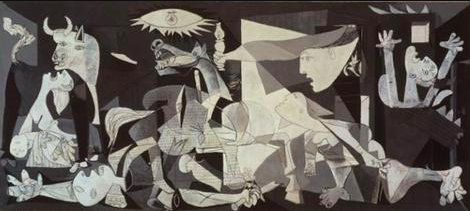
Margaret Thatcher is tall, lean, and trendy; she could be an art museum curator if it wasn’t for her need to understand her own mental illness through others. Though, if she’s fucked up in her life, it wasn’t too catastrophic—she doesn’t put on airs during our sessions and appears to care for my wellbeing. Her office is shared and typical for a publically funded community psychiatric clinic; a khaki box otherwise empty besides a framed print of Picasso’s Guernica hanging on the wall. I feel agitated. Ms. Thatcher’s subdued presence triggers a smudgy emotion inside of me, one which has lingered far from the emotion that bore it, the feeling’s a cross between being nude in public and dropping food on the ground in front of strangers. There are no windows.

“How’s the writing?” She begins.

“Shannon left.”

Margaret Thatcher sits back in her chair and exhales the “Oh shit” she formed inside her mouth.

“Wow, okay. I’m sorry, Josef. You must feel very upset.”

“I know that I am, I know that I should be, but I feel unable to processes it—I suppose I feel guilty. I thought I was doing my best to make her feel better after the assault, but I didn’t help her recover at all.”

“Helping others through a traumatic experience is a tough business. Maybe you did better than you thought?”

I take a second to think.

“I concocted ideas of what she needed and tried to force them onto her without considering I was wrong.”

“How?”

“I let her alone when she needed someone close. I was too close when she needed space. I was thoughtful and patient—I was forceful and impatient to motivate her, but always on my terms. I did everything right and saw nothing get better, so I did everything wrong in hopes to inspire the opposite effect. I could have just asked her what she needed.”

“The former sounds like the flawed logic of desperation.”

“I was anxious and unable to wait. The weight was bearing down on me. Things had to get better when I needed them to.”

“So, since things weren’t improving quickly enough you took control of the situation by blowing it up?”

“It felt like things were going too slowly and I was close to a breakdown. If she were to see me lose my shit, like I’ve done in the past, she wouldn’t want to be with me anymore. Self-destruction wasn’t a conscious choice, but looking back, the only choice to reduce my anxiety.”

“Self-destruction is a common option we choose when we’re overwhelmed and cannot acknowledge and communicate our feelings properly. What’s troubling about patterns of self-destructive behavior is outsiders can clearly see the individual in question’s ill-conceived plans, but the individual is too wrapped up in self-denial to calculate that their trajectory is on a collision course with reality.”

“I remember thinking things were coming to a head and I should prevent that from happening. But, a second after the thought I reckoned a collision was the natural progression of the situation.”

“I hear that a lot,” Margaret Thatcher says. “We also know your family history and how much self-destructive behavior, perpetual conflict and overly simplified resolutions are the norm. It’s easier to stick with what you know.”

“When emotional responses are sought after like drugs to the addict,” I say. “How the hell did we become this way?”

“It was something your mother learned, something she and your uncles were raised with and used to survive in their broken home. You hold onto the ideas surrounding how positive relationships should be and begin a complex process of mimicking several archetypes of normalcy in the hopes you can fake it until you make it, but it’s still acting. It takes self-discipline, counseling, and time to rewire your brain from that kind of behavior.”

“We’re all high strung, anxious, co-dependent, and insecure— I wish I could control how rushed I always feel, how unsteady and ashamed. I wish I didn’t have this maniacal inclination to always be in good standing with everyone. To always quash conflict.”

“Conflict in the world or conflict you perceive is directed against you?”

“I suppose both.”

“I don’t see you trying to change the world?”

I smile and lean forward in my chair.

“Well, I’m apprehensive to change the world after what you did to it, Margaret Thatcher.”

She rolls her eyes.

“You have two more Margaret Thatcher jokes left this session,” She says, dryly.

“I spend a lot of time thinking about people not liking me.”

“I know, I’m your psychiatrist.”

“I look back on my life and think about all the wrong moves I made. How much I went out of the way to seek validation from those I thought were cool, while ignoring the extended hands from friends I took for granted. For someone who cares so much what people think about him, it’s bizarre who often I put myself in embarrassing positions.”

“What do you believe are your thoughts and feelings that keep you from having peace of mind? In other words, what is inhibiting you from being a consistent and dependable human being?”

“My thoughts are always agitated; I’m always anxious. Often Angry.”

“Why do you think you’re always anxious?”

“Because I can’t help but see everything in a state of decay.”

“What do you mean by that? Decay?”

“Entropy. I had to go to the hospital last night to see my mother in the ER and when I got there she was laying on the bed asleep looking like a dying child.”

“Is your mother’s mortality perhaps changing your thinking to see everything through this lens of entropy?”

“No, I’ve thought this way for a long time—I can’t stop thinking in the past. Often good times that are gone, or times I embarrassed myself. When something good happens I remind myself it will soon pass.”

Margaret Thatcher creases the right side of her tan bob behind her ear leaving a single tendril hanging in the gap between the arm of her glasses and her cheekbone.

“Why are these memories milestones of decay?”

“Because they ended poorly.”

“Or, is it that they just ended?”

God damn Margaret Thatcher going after my negative thoughts again.

“I don’t know, perhaps. But, when I think about the embarrassing moments, I cringe and think how can I have such a lack of self-control to indulge such poor behavior?”

“The process of nostalgia is often evoked to stir in us a sense of serenity and closure. However, if that picture is then compared to our image of the present, the here and now looks less than desirable. Perhaps you already know your nostalgic memories are as false as your embarrassing ones. In my opinion, nostalgic memories are more dangerous than self-loathing thoughts.

“I thought you were into nostalgia?”

“Is that another Margaret Thatcher joke?”

“Yes.”

“Okay, that was number 2, now say something smart.”

“I’ve never wanted a relationship of any kind to cease to be; I’ve wanted the connection to always remain even if our roles change.”

“Is this strictly romantically?”

“No, I mean all relationships. Friendships are the easiest to maintain, but somehow I’ve exhausted those connections too often as well.”

“I highly doubt that.”

“I lost many friends after my divorce. I lost more in New Zealand.”

“You’re not alone and friendships forged abroad will always be loose and eventually fade.”

“But, I want a perfect record.”

Margaret Thatcher stares at me as if she sees something inside me that I cannot and begins to smile.

“Your hopes are valid but unattainable. You will lose relationships, you will watch friendships come and go, you will be faced with the inevitable consequences of living in the world, where both good and bad things happen.”

“I wish I had a better grip on my emotions.”

“But to GRIP them, as you say, means you must be outside of them in order to secure them.”

“Okay,” I say, “To control them.”

“What is control?”

“To not give in to temptation.”

“Very Catholic.”

“I forgot, Margaret Thatcher, has a thing against Catholics.”

“Margaret Thatcher joke number 3 for the win,” she says, invoking a weak fist pump with her eyes scanning the chart balanced on her lap.

“How could I not?” I say.

“Control.” She says to keep us on topic.

“It’s to always respond in the right way. To instantaneously weight a situation and perform appropriately based on its demands,” I say.

“So, it’s some Victorian idea of behavior and restraint developed through good breeding and a high moral and ethical compass?”

“Uh, is that what my answer sounded like?”

“To me, it sounded like a bunch of, excuse the expression, poppycock.”

“Is that a Margaret Thatcher joke?” I say.

“No, it’s a you joke.”

“Ouch, nice one,” I say. “Look, I go up and down, left and right. I’ll have a good couple of days and then the anxiety comes back. I’d like to write more, but I can’t draft anything with a semblance of consistency. I’m unstable. I can’t work more than twenty-five hours a week without exhausting myself and getting worse. I’ve never held a real job because I can’t concentrate or be stable enough to do my tasks at a consistent level over time. I run my own contracting business because I can’t have a boss. I can barely work with others anymore because before, I’d get such profound performance anxiety I’d lash out. I’m something to laugh at. I have no control.”

“No, you suffer from rapid cycling bipolar disorder,” she says.

A pause. A dog barks, but from Where? Margaret Thatcher’s lips are pursed with the pride inherent in a well-executed bombing pattern. I riposte.

“No, I think it’s just a learned behavior from my mother; I’m not like her, I don’t eat my fucking meals over the sink.”

“…”

Margarette Thatcher’s green eyes glint just below her bangs and then pop with emerald smoke curling up towards the ceiling.

“So, I’ve been nuts this entire time,” I say, “and people have been placating me?”

“That’s a meaningless sentence. Tear it apart and ask yourself if it holds water.”

“It’s a reactionary thought which bears little on reality and more so upon my insecurities,” I parrot back to her like I’ve heard it a thousand times.

“Correct.”

“But, are you sure? Bi-polar? I’m actually fucking crazy?”

“Josef, you’re not crazy. I’ve been observing your behavior for a couple months now and have been almost certain for a few weeks. However, I wanted to wait and be sure, and to also notify you when you were ready.”

“How the hell is now the time when I’m ready?”

“Because your family needs you to fight for yourself to help them, and Shannon needs you to accept yourself so you can begin loving her.”

I resonate with what Margaret Thatcher is saying, but afraid of what it means. I feel emotional.

“Have you heard of lithium before?”

“Yes,” I say, less than excitedly.

“And?” She asks.

“I’m afraid it will turn me into an uncreative zombie.”

“Well, you’ve been complaining about being an uncreative spas the past two months, what do you have to lose?”

“Good point.”

“Look, it’s all about the blood work. We’ll get you on the right dose, which will stabilize your mood without making you feel like a manikin.”

“I suppose I’ll have to trust you,” I sigh.

I look again from Margaret Thatcher to the Guernica print and realize that I’ve been screaming in the inside like the cow in the painting for years.

“You put that print there on purpose, don’t you?” I say.

“No, but someone did,” she says.

I look away and my eyes begin to swell.

“This isn’t a loss, Josef. This is a chance to gain control back.”

“What if I’m scared to have control? I’d rather keep wanting it than to actually have it.”

Sunsets Over Troubles Immemorable

vietnam-wall-graffiti-842x452

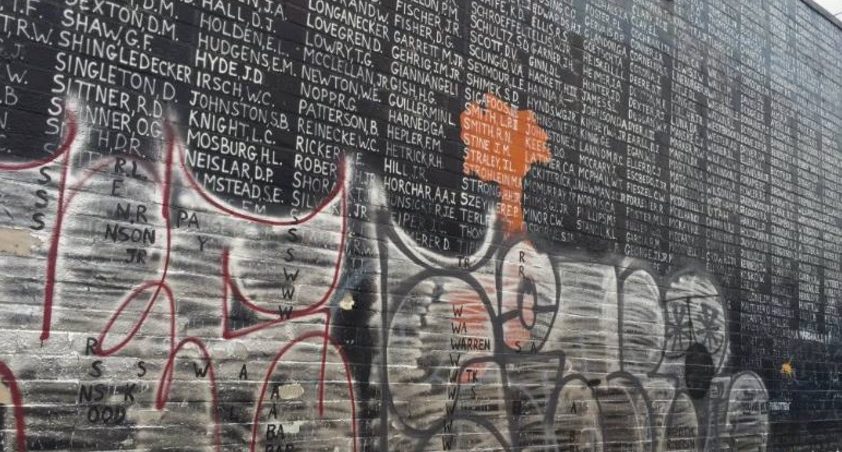
My dad’s a vet. Vietnam. He graduated high school, took off to Iowa for the corn harvest, and ran with the carnivals selling postcards and knickknacks until one day outside of Baton Rouge he got a phone call from grandma telling her only son his draft notice came in the mail. His boss, Pennant Red, said to him, “Son, get your ass back to Seattle and sign up for the Army so you can go through Basic and pick what you want to do. Otherwise, you’re good as dead.” Lucky for dad, between Pennant Red, Little Joe, and Big Cowboy and Little Cowboy, there were enough war veterans working the carnival circuit to give my father the best advice to save his neck.


For him, not going wasn’t an option. Not because he agreed with the war, but because it didn’t seem like the right thing to do. So he went to Vietnam and felt wrong about it the whole time— and when he got back was told he was wrong for being a soldier and for going. He told me he was convinced his plane home was going to crash and sweated the whole ride home. He got off the plane at Sea-Tac Airport and went to the bathroom to take a leak. The bathroom was strewn with abandoned army suits. Dad refused to take his off, not because he agreed with the war, or even because he respected the army, but because he couldn’t disrespect those other soldiers who didn’t make it home.


He waited all night for a cab, but no one would pick him up in his green suit; so he called his dad, and Grandpa picked him up.


Settling back into American life was difficult. He told me he was really interested in a girl, but she told him one evening over a beer, “I just wouldn’t have gone.” That’s what she said, “I just wouldn’t have gone.” He disappeared for a few years after that but came out the other end. We are all thankful that he did. Some in our family didn’t.


Grandma told me, my Great Uncle, Ken died during WWII in Alaska. Ken was her favorite brother. I asked my dad, when I got old enough, how Ken died. Dad said, “He was stationed on a tiny island in the Aleutian Island chain and thought the war had ended and was forgotten. He ended his life with his service weapon and was found days later.” With Grandma, painful things were always masked in understatements.


She said her younger brother was a very sensitive boy, but brave. He began to leave the farm at six-years-old to work the railroads and would come back with money for the family. I think Dad reminded her of Ken. When I asked her what she thought of dad going to war, she said, “We took a road trip back to Iowa one summer when the kids were young and your dad insisted that he always got to a campsite before sunset so that he could lay on top of the car and watch the sunset slip behind a mountain, cast its rays over a cliff, or set a cornfield on fire.” She paused and stared into her past and then qualified her story, “A boy like that isn’t meant for war,” she said. “And, that’s the thing.”


Fighting hurts us all.

The Green Turkey —Preface

IMG_5776.jpg

I like this courtroom. It’s not modern—one enclosed in glass, secured with metal fittings and detailed with sculpted plastic moldings that make impossible shapes look natural. No, it’s an old oak-clad room with a high ceiling, a square space wrapped in over-waxed wainscoting and decorated with heavy art deco furniture. The floor is granite, the aggregate of which, the size of Perry mason’s eyeballs. There are tall windows to my left letting through the sun. The light leaks through the shades and I can see dust particles dance in it and settle on the empty seats of the jury box. The atmosphere’s pleasant, tranquil if it wasn’t for the feeling of impending doom inside my stomach. The jury is in chambers deciding if I killed my mother for the right reasons—that same question still burns inside of me, but I’ve lost track where it is; it feels like it will never be resolved, lost in my veins.

It’s complicated. I’m a murderer, but my conscious is often clear. I see things simpler now since I took a look inside my mother’s denture-less mouth and saw the image of the woman she used to be crawling up from the darkness of her throat. I see strands of DNA in place of skin and bright colored steam emanate off the bodies of strangers. Goodness makes me cry. All is passing, all thoughts are fleeting, every moment for me feels like this is the end of my life. I could be calm while drowning and smile while choking. I could be found guilty and bow to the jury. I’ve accepted all the possible outcomes.


My lawyer, on the other hand, has not, and she tells me I’m emotionally compensating due to my current levels of stress and anxiety. She calls my enlightened state of being, monking, i.e. pretending to be all-knowing and unaffected by a reality I have no control over. She’s right, but for now, must be wrong; going Buddhist monk is working, at least I’ve convinced myself so. Regardless, it beats the hell out of trying to go Albert Camus/existentialist with it, my first phase of denial. In the end, becoming L’Étranger made me feel like an aging hipster bursting out of his leather pants while trying to shine his beetle boots in front of an impatient firing squad of twelve jurors.

Speaking of annoying, my lawyer has a nervous habit of giving me pep talks when she’s feeling pessimistic, like right now. Ironically, She’s also trying to convince herself that she’s in control of a situation beyond her grasp. She’s not monking, per se, but it’s still a form of compensation. She’s lecturing me about what’s REALLY going on, and how our case has a fair chance of success. I stopped listening to her ideas a couple minutes ago, instead, counting what words she repeats the most. Strong—as in a “strong indication,” “strong chance,” and a “strong possibility”—twelve times. Perhaps, eight times. Regardless, five times. And, Not the end of the road, four. I don’t mean to be rude, and it’s not her inability to realize her veiled doubt is subconsciously leaking into her language which bothers me (I mean, I’m pretty much fucked), it’s the fact she thinks she can convince me otherwise. I know she’s coming from a good place, that she’s trying to deal with her own stress and anxiety, but it’s not like there’s anything we can do now, and convincing ourselves we did enough, isn’t enough. It’s better to monk the situation than to over-analyze it or turn beatnik.

Tamar Chansis-Corbin is such a good name for a defense attorney—a speed reading, top-5 Harvard Law graduate, type-A attorney. She’s taller than me and rail-thin. Her hands are long, slick and purposeful like shellacked shoehorns. She has a dense afro parted down the middle, which she lets eclipse on the weekends. Come Saturday, Her glasses likely come off too. On weekdays, in court, she rocks a pantsuit or a pencil skirt and blazer. Pearls every other day. Small earrings, irregularly. Eye mascara like Nefertiti, calligraphy on deep golden skin.

Tamar wasn’t the first attorney to visit me, but she was the first visiting creature who exhibited human traits. She walked into my cell confidently, but vulnerable, which matched the state I was in after being grilled by two Seattle homicide detectives for 17 hours, and 48 hours deep into a beltless suicide watch and three ham sandwiches. I won’t lie, I was attracted to her, but that attraction let me trust her at a time and within a system where I trusted no one. Plus, we are from the same neighborhood in South Seattle, pre-gentrification days, so there’s a bond that comes with that. She was new—backed by her father, partner to a firm, a successful defense attorney letting out the line on his protégé—and I was new to this too. It might sound counterintuitive to want a young and inexperienced lawyer, but she had the resources, and she was working the case pro-bono. I don’t know what else to say besides it just felt right.

“You listening to me, idiot?” she says.

“Just the words.”

She looks away, up to the bench, and sighs before looking back.

“I don’t need this monk shit right now; I need you to listen to me.”

“Yeah, okay, but don’t you want to know what words I was listening to?”

“No?… NO.”

“Fair,” I say.

“In the event you’re found guilty we can appeal.”

“I know.”

“I know you know, but I need to tell it to you again, so you don’t begin chanting Om instead of fighting your conviction because you’re one with the universe.”

“I can be one with the universe and also refuse to take it up the ass,” I say.

“How inspiring,” she says with zero affect.

“The title to my memoir.”

She disengages in refusal to admit she thinks I’m funny. She hates smiling more than Anthony Scalia’s ghost. I’ve tried really hard to crack her shell, but she’s tough and also smarter than me.

“You know what I should be found guilty for?” I say.

“What?”

“This outfit. It’s fucking hideous.”

Like my high-school picture days, I’m wearing my older brother, Eligh’s clothes. A dated black blazer over a massive jade green silk shirt stuffed into a pair of pleated khakis, all resting on top a pair of black and white oxford saddle shoes. It’s honestly the weirdest outfit imaginable, but my suit went missing this morning and Eligh raced home in rush hour traffic to throw something together. He’s in the middle of moving and found them in a trash bag of old clothes that hadn’t been moved yet, or opened since 1998.

“Guilty of smelling like Value Village,” she says.

“Or, teen spirit.”

“That a Grunge joke?”

“Don’t be so Kurt.”

“Oh, god, please stop,” she sighs. “Like I said, the jury can come in at any moment. This is day three of deliberations, so time is on our side. —If they’d took only a couple hours, we’d be screwed.”

I continue to nod to Tamar, but I slightly turn my head to face Eligh. I mouth, “What the fuck?” to him while pointing to my outfit. He smiles and mouths back, “Sorry.” Tamar looks at him and smiles; I can’t fathom this.

Eligh’s nearly twelve years older than me, the last of mom’s first marriage. We look like brothers, but there are distinct differences. He has more hair, I have more common sense. He loves money, I love books. He can’t hold a relationship, I can’t be alone. Though only the difference in hair volume is likely genetic, I’d like to think they all are. I suppose that’s what we have in common though, the ability to believe whatever we want to for the sake of convincing others of whatever we need them to believe. I suppose that’s another form of control, a way of monking with the masses, a way to temporarily put insecurity aside and be the one that is in the know.

“You’re going home,” he mouths to me, after giving Tamar too long a look.

“Where is home?” I say.

He rolled his eyes.

“Not here, idiot,” he says.

“Seriously,” Tamar interjects, having read my lips. “You’re a published author and yet your proclivity to descend into cliché and melodrama makes me want to puke.”

“I blame my mother; that’s why I killed her,” I say.

“That’s not cool.”

“Mom would have said that was my Irish sense of humor talking. Although, I could never understand what that really meant.”

“Um hmm,”

“You just um hmm’ed me; take it back,”

“Um hmm,” she repeats.

“Psst,” Eligh hisses. The press and other randos in the seats behind look over to us.

Tamar smiles, again.

Eligh points at his watch.

“What’s taking so long? I’ve got a WhatsApp date with Aja in an hour.”

Aja is our older sister. She lives in England and is married to a Morris dancer. They love Doctor Who and take travel pictures with a stuffed skunk. They’re dorks, but good people.

“My fate takes time,” I say.

“So does the freeway,” Eligh says.

“Don’t you dare smile at him again, Tamar.”

“Your brother’s cute,” she turns and whispers.

“He’s fifty.”

“But he looks forty.”

“If I lose this case I’m reporting you to the bar.”

“Um hmm.”

I turn around and look at the empty bench in front of me. I imagine The Honorable Judge Maddox is in her chambers eating a salad, drinking a blood orange San Pellegrino, and already knowing the answer to my guilt or innocence. This whole fucking show is so Kafkaesque because the law has so many doors with so many ignorant guards; because it mirrors our broken society, but still operates with such a resolute and cold logic; because my name is Josef and I’m on trial.


Another hour goes by and Eligh is gone. I again look behind me and the diehards are still here. Pete Sorenson, the jack ass from the Seattle Times who wrote that I’m “the epitome of white privilege,” when ironically, he is. Tabatha O’Riordan, who wrote, “What if he’s a saint and not a villain?” which is in the running for the most painful cliché title of the year. My favorite diehard though is Omeed Faraz, a second-year Seattle University law student who asked my permission to sit in on the trail as part of his fieldwork for a class called: Ethics, Morality and the Law. I’ve let him interview me a couple times to hear my side of things. I can never tell if he’s shy or afraid of me. This gives me no sense of power, but of loss. To be branded guilty is one thing, but feared by good people, something else. Still, the most objectively I’ve been able to consider my situation is with him. He’s a good listener, and like Tamar, a lot smarter than me.

The last diehard is my father. He sits in the back seats either playing Sudoku, solving chess problems or reading George R.R. Martin’s Game of Thrones series. The two former are staving off the aging process, while the latter negates his hard work. However, I’ve never read them, only watched the first two seasons of the series, so I should shut my mouth.

He looks up from his work and stares at me, but only when he thinks I’m not aware of it. I think he’s trying to understand why I did what I did to my mother. How he should care about her death after being divorced for so long. Perhaps, he’s trying to figure out if he still loves me, or if he can love me? I suppose, if I’m convicted he’s all alone; in a way, surviving the figurative death of his only son. He’s meditating on the prospect of mourning. Lately, eye contact between us is rare because I think he wants to spare me the embarrassment. He sees that I’m distressed and so wants to let me be, like an injured animal in the woods. He can’t do anything to help me, so perhaps keeping a distance is the safest way to manage? I get that being the defendant in a high profile legal case is way too much attention for Leonard, what I don’t get is Game of Thrones.


“You didn’t like Game of Thrones?” Tamar asks, rhetorically. “You’re such a hipster.”

“Why does that make me a hipster?”

“You don’t like anything that’s popular in the mainstream unless if it’s enjoyed ironically.”

“That’s not true.”

It’s totally true.

She grabs her purse and pulls out a stick of lipstick and applies the crimson fudge to her lips in front of an open compact.

“That’s a nice color.”

“Shut up,” She says but flashes a coy smile.

Finally! But, my triumph makes me weepy, and I look away to regain my composure.

“What’s up?” she says.

“I’m going to live out my days surrounded by dangerous men.”

“Welcome to my world.”


***


I lay awake in my cell staring at the bright red exit lights above the door where the guards come and leave. I can smell pizza, hear the excitement attached to men speaking about football, and the listless turning of my neighboring inmates. I’ve been called a momma killer by a guy who killed his girlfriend. I’ve been high-fived by a janitor named Karl, who only listens to John Lee Hooker on his classic yellow Discman. I’ve had a guard named Obi say he thinks I’m a good man. Another guard named Tommy, who hopes I get the chair. I’ve lost weight, but sit-ups still kill my back. I can’t read because I stare at the page and ruminate about all the things I cannot control. Trivial things like what will I be fed tomorrow, or which guard stole my suit?

Eventually, the overwhelming things flood my thoughts. I think about my girlfriend, Shannon who might be my ex-girlfriend now—After all, she did say I was fucked up, said it was over and hasn’t been in to visit me in over two weeks. I think about my brother, Fran and imagine what he used to look like before being eaten alive. He has long hair, wears a Hawaiian shirt and is leaning on a golf club winking at me. I think about mom and the times we recited the rosary after passing a car wreck on the road.

Even though I don’t believe in it, I think about what hell might actually be like, and then I imagine being strapped naked to a wet couch watching Game of Thrones with Martha Stewart. She whispers the directions to every recipe she’s ever published in my ear and begins to scream at me for making her life miserable. Another sex scene to obfuscate the banality of exposition erupts on the screen and my cock gets hard. Ms. Stewart gets a great idea and pulls a razor-sharp carving knife from her purse.

“I have an idea,” she whispers into my ear while stroking my penis, “It’s a take on zucchini pasta (zoodles)—dick ribbons.”

I begin to scream but bubbles come out of my mouth and children come into the cold room to play. They scream at the sight before them and their parents rush into the room. They initially turn away in horror, but then usher their kids out and blame me for it all.

“You started this. You, started this mess,” A distressed mother screams, coving her eyes. Blood spills over my lap and runs down my legs.

“I build my recipes for the common housewife,” Martha says.

Luckily, I have other nights where I’m fine and think of movies I like and try to re-watch them in my head. I can replay Wayne’s World, Clue, and The Usual Suspects in their entirety. On these nights I know my love for my mother is true and that I did the right thing. Fran enters my cell wearing his long hair and a Hawaiian shirt, swings his gold club and winks.

“It’s going to be alright, otouto,” he says.

My father appears sitting on the edge of my bed, how I remember him when I still played Little League and asks if I’d like to do a chess problem together. The other inmates in my block yell good luck tomorrow from their bunks and promise me small gifts upon my release, like a taped mirror to look down the hall with, and a quality shank with fresh tape.

Most nights I’m an empty vessel, like that dancing bag in American Beauty, or Ryan Gossling. I can read for hours but remember nothing the next morning. I write, I think some of the best prose I’ve ever written with a crayon (suicide watch), but when I reread it, the paper looks something akin to what a parent of a toddler would put up on the fridge and say “That’s great!” about. On these nights, I believe I’m being inhabited by my former selves. It’s not a reasonable explanation, but one that mystifies the world and makes life less predictable; Scientific query and western demystification are not allies in here. I feel depressed when I use logic to address my actions because perfection is implicit in logic. Linear modes of inquiry are so lame. My ghosts try and communicate with me, but there is static between us and that is why I can hear them, but when I write down their wisdom it comes out looking like toddler drivel.

So, yeah, long story short, I’m monking it and Tamar is right, I’m an idiot. I’ll admit it, but it’s a form of manageable insanity that’s keeping me from becoming too co-dependent, obsessive, and dark. That’s what happened to me when I got divorced. That’s what happened when I was homesick and moved back to the US. Those were the ghosts of me who visited and are trying to save my life. They know I will lose my case and are preparing me for the worst. I have agency when I get to decide what affects me or not; it’s my last ring of defense, my safe room.

However, tomorrow is the day the jury will make a decision and that decision will be my biggest test, one I will likely fail, it holds too much weight. It’s funny that this whole thing started because of writer’s block.


Too Late and On Time

It just sucks David is dying. There’s really nothing else to say, you know? My brother is dying and it can’t be stopped. And, at every turn—when he was diagnosed, when he was going through chemo, when he got better, and when it spread throughout his body—it was always, what am I going to do about work? How am I going to pay rent? My bills? There never was a time I felt I could afford to go and as a result I never got to see his life. So now I feel the least I can do is see his life in Japan while he’s expiring. Maybe I’ll visit his local haunts; his old bars, his old places of work, his neighborhood mini mart, and find his ghost. Maybe he will tell me what happened to my brother the past 15 years since he left. Maybe then this’ll make sense.

A Letter to Enoch Campbell 27 years after the Great Seattle Fire of 1889 (first draft)

Screen Shot 2019-02-05 at 3.37.49 PM

March 23rd, 1916

Dear Enoch,

It’s been 27 years since you threw me out the window of the burning cabinet shop on Madison and Front Streets. It’s still a mystery to me if you did it to save me, or kill me. Perhaps, it was a bit of both. In 1889, Seattle was a troubled city and we were troubled young men. You were still reeling from the death of your wife, and I was destroying the faces of Seattleites under the naive assumption that I could halt a thing as salient yet wraithlike as historical progress, through murder. I suppose, young men have a tendency to think they are mining the center of things when they’re still only scratching the surface. Ego, a basic understand of things, and tenacity get you far in politics, but no more than an inch into the stony skin of life. Sacrifice is a pure enterprise, but fails to mix well with modern intellectualism. You should know that I plan to kill again.

You and I are different in many ways—I’m sure you have spent more time considering and convincing yourself of that than I. However, what we have in common is a hatred for authority and a healthy loathing for fraternal orders. The schoolyard, the sporting team, the university, the office, government—fraternity infests them all. I saw how much you hated the law firm where you worked in Seattle, but how at home you were in Madame Lou’s “hotel.” Anywhere is better than in the midst of a group of apes beating their chests and strategizing their moves within a game no one else wishes to play. Here’s a word for you to ponder: patricide.

I cannot tell you everything about my motivations without telling you everything. You need to know how I was ruined. I want you to know how the events of my life affected me and sent me down a path of masculine uniformity. I once was a man who was willing to strip others of their dignity to maintain a world in which I was king. Now I’m a killer of fathers resolute in the fact that my own ending will be misunderstood and gruesome. So be it—the world is currently at war by such notions of domination.

Before you is a manuscript which tells the story of my life before our paths crossed in Seattle, and what followed after the burning of the city. Before and especially after, I met many people who for better or worse changed my life. It’s important for you to know because I want us to be clear before I end our lives.

Like I said, sacrifice is a pure enterprise, especially when our motivation is to appease a theme that is prehistoric, pre-conscience, and a central building block to our species: To consume and be nourished. To eat them. Eat them all up.


I’m Not a Newt! I’m an Author.

Screen Shot 2018-11-24 at 10.43.27 AM

“Could you please put down your phone,” she asked.

“Yeah,” I said, without looking up.

“No, like right now.”

“I just need to finish this post,” I said, feeling like I was working against the clock, playing a dangerous game with my girlfriend’s patience.

She sat impatiently, looking at me like I was a cat she was about to throw across the room. All I had left was to add the hashtags. But, which ones to use? If they’re too popular you get lost in the shuffle, too small, what’s the point? Be clever, be funny, be humble; rather, be a humble-brag monster of explosive optimism and saccharine contentment. #superpositivebooklover. #blessed. Post.

Oh, for fuck sake, I’m a tool!

That’s how social media marketing often feels. Not only am I a tool, but a poor man with a gambling problem throwing coins down a well, waiting for one to jump back up. The big bite. Impossible.

When I received an offer from a publisher to publish my historical crime novel, Throw-Away Faces, I was excited. Finally, I’ve made it! I knew next to nothing about the industry, but my publisher seemed legit enough. Beggars can’t be choosers when approaching a publisher unsolicited. I told myself this on more than one occasion. Yeah, okay.

Well, now that the book is published, all I can say is that I’ve accrued thousands of hours of rewrites and edits (good), relationships in the industry which will serve me well down the road (good), and a huge phone addiction predicated on wagering the worth of my book on the amount of “likes” it gets on Instagram or Facebook, or my author’s rank on Amazon Central (VERY VERY BAD).

What I didn’t know getting into the game is that the book market is absurdly competitive and awash with a lot of shit. It pays huge dividends to have an agent when shopping the book, and once publishers show interest, to pick one who pays their publicists to manage your marketing. This is key.

Otherwise, get ready to hate your life, and possibly your book, because you’ll be throwing countless emails, letters and time into review queries that will never be looked at by newspapers, journals, and magazines. And, money into many .com black holes. This will boil down into an ill-conceived effort, commonly called a self-marketing plan, to master nuanced and disingenuous forms of marketing communication forged to manipulate strangers into clicking a link to buy your book. It’ll never be enough. You will look in the mirror and see a Gollum.

When you’re fatigued, your publisher will offer you cooperative packages that are vague in description, but enticing. They whisper sweet nothings into your ear, “Take a load off, Joe.” “Let us do the work.” “We’ll send your book into the hands of the most talented, sexiest, and trusted reviewers in all the land.” And, can you blame yourself for giving in? No, you really can’t, but you will anyway.

The other option is spending countless hours online making virtual friendships and alliances, which is fine, and the right way to do it, but the task is a full-time job and will yank you out of the world of the living.

Don’t get me started on the writer’s block I’m currently experiencing because I now have the attention span of a newt who happened upon a horsefly turd convention.

“How was your day?” she asked.

“Fine.” It wasn’t; I didn’t sell one book. I didn’t get a word written for the sequel. I didn’t do my research. I clicked the refresh button a lot. My phone says my screen time is up from last week. I drank too much coffee. I went down the spiral.

I forgot I’m an author.

So far, this is what I’ve learned from the experience: Do what you think is right to get your book out there, but not at the expense of your creativity. At some point, you just have to let it be, write the next one and make it better than the last. You’ve made your bed for now, but you can get a new one. The worth of your work has nothing to do with a stranger’s thoughtless click of a “like” button. If it was, your time would be better spent engaging in #vanlife.

In the end, stay an artist. Stay balanced. And next time, get a publicist.

You’re not a newt.