Turnstile

I need a break.

To do something that feels like growing.

Creating something.

Writing is often better than talking. At least for me. I can talk to myself through others there. The characters that come out from the fog. They have something to say.

Day in and day out I talk to walls. Stiff apparitions asking for liquid amongst the plaster in their mouths. The cement builds up. What nourishment is there! Where the water only soothes the symptom.

The shallows have provoked a destructive sense of vulnerability where the cat chases its tail. I fight by turning off my filter; like I’m combating monotony with daring statements of defiance.

But it’s just bad jokes,

erratic gesticulations,

and stories that were better left buried.

Mean and dark to be kicked out of where I cannot leave.

Great, I’m pleading with something that’s not there again. To be unconditionally understood. Where does the man go when dad dies?

Mouths staring back at me with their eyes.

4 am

A limit has never been an external concept for me, rather a limit is dependent upon a range of subjective factors contingent on how far I want to press the line between rationality and irrationality. Losing control reminds me of my youth, perhaps because I never had it, or I never knew what to do with it when it was on my lap. It is odd, now that I’m more or less a stable adult, how hard it is to watch some of my students lose control.

It’s remarkable how exceptional I think I am when it comes to navigating dangerous territory. This has nothing to do with my treatment of others, rather how I want to live without hands. When I was faced with a student the other day who did not want to live, and who’s silence proved their point, the blending of the rational and irrational terrified me, and I had this overwhelming feeling that I needed to take over the controls and plunge us into the deep and dark waters of timelessness. I’ve learned that forgetting time makes it easier to be. But to be handless in a submarine…

That they wanted to only talk to me fed my ego, yet left me an imposter. Who really am I to help? I, the one who has been broken and repaired so many times that my identity is plural. I, the one of many masks, both civilized and contrived. We, both the I of my self talk and the me, the listener inside.

“Do not die, I swear to you, do not die because tragedy will become a friend and you will learn how to harden. It will become old hat, but be warned, you will miss the intensity of youth.”

To be ridged like scar tissue and ask of my students to be mailable as water is a form of self-talk long gone from my internal set of tools and a concept I use to obfuscate the truth that I have no answers to make this world make sense. It is worth living long enough to realize this is a comedy.

“Do not die, live! Live, because you’re almost at the best part, the part that will split your consciousness into water and oil.”

Shake up your mind, and for better or worse, watch your heavy memories shape your actions as you stand by, powerless to subvert your unconscious behavior. The best you can do is keep your eyes open and watch them rise, to collect at the top and unify into one imperfect self who deserves to be.

Sometimes it is better to stay awake in the dead of night.

It can be like Life

Brackenridge Varsity girls’ tournament season comes to a close. The three words that come to mind to explain our progress is commitment, mindset, and patience. Most of our players don’t have a history playing club soccer so we’ve been working double time to acquire new skills to improve upon our performance from last year. It’s a tall order but the team has shown unwavering commitment to reach the next level and compete. I’ve been surprised by their ability to keep fighting, even when they’re frustrated and feel like all is lost.

It takes patience to wait for the results you want immediately, especially when your pride and reputation are perceived to be on the line. We’ve had our fair share of disappointment and growing pains the past two weeks. However, how are we to succeed if we don’t face periods of adversity? Unfortunately, getting beat has always been a part of the process of winning.

I see great signs of future success emerging on the field. I know it’s hard for our players to see, but the plan has always been to ‘click’ and show our mettle when it matters the most. I believe we’re on track to deliver when it counts and maintain our consistency on the field through the course of district competition.

It has been a true honor to be part of this process with such a fantastic group of players and coaches. Things always take longer to come together than anticipated; this is a law of living I’ve come to realize through experience. That you can achieve anything if you don’t give up is also a principle I very much hold to be true. Our time is sure to arrive.

Coaching is an important part of my life and in ways I cannot completely articulate yet. All I know is that I come home feeling like I’m doing something meaningful and that makes me feel valuable. as I’ve gotten older and comfortable with my life the urge to help others has become the most important thing in my life.

Flag Day: Using Absurdity to Gain Trust

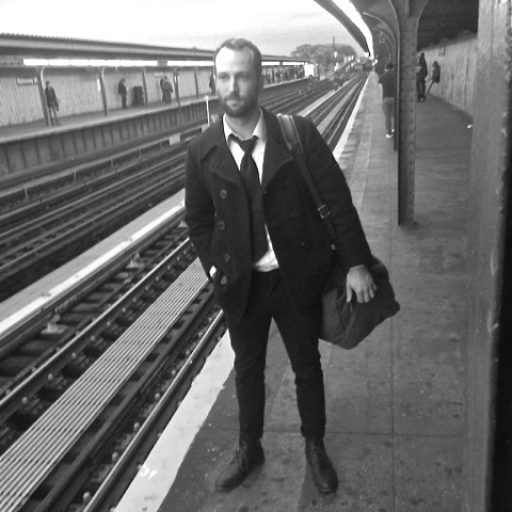
New York City, 2013. When I was a complete train wreck.

As I’m writing this my computer reminded me that tomorrow is Flag Day. I often tell my students Flag Day is my favorite holiday because it’s weird and I like seeing their reaction. When I began teaching high school seniors two years ago, I relied on being both weird and sincere rather than being authoritative and serious. I suppose I decided to do this because I am neither concerned with control or punctuating knowledge through driving home a topic’s severity. Student’s these days see too much hollow authority through their parents, and teenagers have a penchant to steer most of their situations to the dramatic and catastrophic. I’m no stranger to this. 

I was born without the ability to remain calm. My issues with anxiety are perhaps genetic, or more likely learned. They are for sure environmental and have plagued me for the better part of my existence. As a preteen, teen, and twenty-something, and a thirty-nothing I used substances, relationships, and a strange obsession with both politics and professional baseball to both mask and ironically build my anxiety into a fortress of sustained self-emulation. I can collectively describe my fascination with the above, as akin to a madman frantically betting on the ponies with other people’s money to climb out of debt. At some point, usually when I’d have an “episode”, I’d run off with the money and burn down what remained stable in my life. Robbing Peter to pay Paul is a game the desperate play when they try to outrun one stressor by suppressing that stressor with another. It’s like a psychological speed ball. When I’m high I am not anxious, when I’m hungover, I am anxious. Let the wheel keep on rolling and watch the horses run. 

Approaching 40, I realized that I can usually be funny whenever I want. I’m even funnier when I drive over myself with the funny bus. I realized by being myself I can make people laugh and I can purposely direct people to laugh at me. For example, I made a big deal about believing that my strep throat was likely cancer, and I juiced it to its full extent. Obvious to everyone else, I did not have a life threatening disease, but when I went as far as promising away my belongings to my students and coworkers, it became a sort of game. We all knew it was bullshit, but it was fun for some macabre reason. It was the absurdity of the whole thing that turned what would normally be a tragic or bizarre escapade into a collective joke shared by my students and colleagues. I even had a teacher hand me a rebate on having some local law students draw up my last will and testament. My anxiety about my health didn’t go away but turned into something else. I turned it into a punchline, a joke to ridicule and brush aside. Self-effacing humor works way better than fucking up your life by burning bridges. It took me 40 years to just be brave and let it all go. 

The Jack or all trades has commitment issues. I often use my frenetic and bi-polar resume to impress people about all the shit I’ve done in my life. Yes, I’m proud of all the risks I’ve taken, how a guy like me went from an academic and traveler, to a cheese monger, to a carpenter, to a business owner, to a volunteer fire fighter, to an author and educator. Yet, I leave out the self-harm, the self-pity, and the inability to commit to a path. I did these things because I was lost and searching for external answers to internal struggles. I did these things because I was always anxious and fearful. I ran at my fear as if I were suicidal, bravery by bailing out before I could fail. I suppose that was a poor attempt to control what cannot be controlled. Change. Therefore, fuck control. 

All this is why I teach and why I give my student’s another way to learn and be successful. It helps being a narcissist without control issues, but even more useful is not forgetting what it’s like to be a teenager. Especially a seventeen- or eighteen-year-old. In some respects, you could argue that I grew up in some areas, but not in others and I’d agree to that. You could say that I sustained a healthy amount of childhood and adult trauma, which has sustained me through life, but has kept my memory sharp, like how traumatic experiences becomes oral traditions to murders of crows who roost in golf courses, constantly under siege by stray golf balls. I don’t know why I respect teenagers as much as everyone else. I don’t know why I let them fail and then give them a chance to make it right. I don’t know why I love them. I don’t know why exactly I see myself in every student, especially the one’s wide-eyed and morose. I suppose it’s because I don’t believe in a plan. I don’t believe in being one thing. I don’t believe in perfection, and I certainly don’t believe in pushing young adults to the brink of an anxiety attack because they don’t have their shit sorted at eighteen. They’ve watch most of the adults around them struggle and the thought of growing up terrifies them. 

One of my mentors at my high school told me that she respects me because I’m battle tested. She knows I can survive. She sees that life doesn’t scare me. I’ve got the scars, but along the way I’ve freed my spirit by making them available for mockery. I make fun of myself, of my journey, of my failures and triumphs, and there in front of the class I’ve broken down the invisible wall that separates educator from student. Perhaps they trust me, because I’ve entrusted them with all my failures. I can only imagine what a relief that must be as a graduate to get some honesty. 

Happy Flag day. 

The Elusive Salmon

salmonmedium

Across my little apartment is the city locks. The locks see every boat coming in, or going out to sea. Though there are a lot of boats coming and going there’s also a good portion of the day when the locks are empty, and when they’re empty in the late summer and early autumn, schools of spawning salmon enjoy the peace by leaping out of the water, and going plop back in.

I say plop because that’s usually all you hear. It’s not as easy as you might think to spot a jumping salmon. Try as you may, staring in one spot and waiting for a salmon to jump is a fool’s errand.

Today’s Friday, and I have no work to keep me from the locks. I was also here this past Monday, and the Friday before last, not working, instead listening to the salmon go plop.

The rest of my time spent has been in my apartment. I’ve been on the computer, looking through job postings. With the click of a button, another resume goes into the blackness. For each prospective employer, I tell them that I’m qualified, a quick learner, and nearly perfect. I wait and watch for a reply. I wait, and watch.

While I wait, I try not to think about how hard I’ve worked to be broke, how maybe my quest to define myself as independent, unique, and a stand-alone has greatly compromised my ability to write a good resume and cover letter—I can’t seem to connect.

I finally pull my eyes away from my computer screen and make something to eat, and when I return, another rejection letter has been sent from a web address that begins with, “donotreply.” Cowards.

All these rejections come when I’m not looking. It’s the second I break my will to force good news that the tech world tells me to keep fishing (and to follow them on Twitter, etc.). I get angry, and then sad, and then I tell myself that I’m an anomaly, a force of nature that their vetting algorithms cannot grasp or define. When these half-truths escape my lips, I become thirsty for alcohol; for a cigarette before I return to my seat at the gambling table.

Yesterday, I spent the day doing something different. My mother had called to tell me that my brother lost custody of his daughter and threatened to kill himself. He texted me later and asked me to take care of his life insurance policy. He then turned off his phone and disappeared. I spent yesterday hunting.

When a salmon goes plop and you turn to the noise there’s a gentle wake. It spreads and rolls from its starting point in perfect symmetry. The succession of arches spread until they are swallowed by the bigger currents surrounding them. They die into the fold.

My brother’s wake continued for some time before he jumped. Not off a bridge, or a building, but by text message. He contacted his daughter to tell her that everything’s fine. He was alive.

I spent yesterday guessing where my brother could be, but I didn’t know until I did. I haven’t seen or talked to him. I’m not at all ready for that.

Some boats have arrived now. In particular, a fishing vessel with three deckhands chattering in Italian. The salmon are still jumping, and I can hear that language too. I’m too tired today to apply for jobs. It’s a fool’s errand anyway.

Today, I came to the locks and saw a large salmon, looking green and pink, she jumped right in front of me while I was looking at the boats waiting to go out to sea. She went plop and I saw the whole thing.

 

The Sailor

images

He was scared and I was sorry for having to draw blood a second time. He was a sailor, an alcoholic; a dry docked man too old to sail with a son cemented on the shore. His liver was crying for a break and he cried out when I stuck him a second time. He pleaded, “Don’t stab me again.” The Medic nodded at me to stick him until the blood was milked good to sample his blood sugar.

On the rig he was sweaty and grey. His heart rate started to crash and the medic asked me, “Josef, could you please undo the patient’s shirt.” We pulled the rig off to the side of the road. He was dying, or at least it looked like it. It felt like it. I stopped breathing and then I did breath and I became loose and open. We double-checked his patches, I swabbed his arm, and the medic gave him something magic, his BP cartwheeled then jumped back up, like an impossible acrobatic trip up a flight of stairs.

“I’m cold,” he said after a while.

I put a blanket around him and we continued for the VA. He had been in the navy. “That’s where I learned to love the sea,” he said. “I’ve passed through the Panama canal more times than my son has come down from Alaska to visit me,” he said. “Four times,” he said.

His son was in his dad’s living room when we had arrived on scene. He looked scared. The old man was worried that his son would never come back again because he got sick. “I’m weak and old,” he said. “I think you’re brave, sir,” I said. “No, I’m old and scared of everything,” he said. I didn’t know what to say to that, but I kept him talking until we arrived to the ER.

I keep dreaming about him. I keep dreaming that it was just me in the rig and I didn’t know how to fix him and he died.

THE STORIES THAT ENDURE

Image

There were good times and then there were the other times where my hair started to fall out in clumps in my hand and when I’d ask people to tell me how I looked they’d say fine and I thought they were just being nice until I looked in the mirror and everything was in place and I was just imagining things. I’d get a pint and we’d all drink together and I’d wander off in my head every so often thinking about a new story and how we were all going to be a story once the night was done when all of our clothes would be scattered on our bedroom floors, our conversations echoes, and the looks shared between us absorbed and stored away. There were many of those occasions, the times when we would all text each other from locations around town and slowly but surely tighten our proximity to collide at the pub and recite the happenings of our respective days in the cadence of comedy. There were good laughs, and the more there were the greater the magic to multiply empty glasses and fill ashtrays. But the whole time I was feeling this eruption in my heart that I couldn’t explain or control and I knew that something big was growing in me and I couldn’t tell anyone because I didn’t even know what was happening and it was too much anyway.

At night I’d feel like I was drowning — but I eventually learned how to be a submarine in the murk of my subconscious. I’d wake up wet in my room and feel really cold and alone and would want to talk to somebody about it but there was no one except the end of a cigarette and they were the wrong kind of little mouths when I needed a big hug and some self-love to carry me through. But I knew I’d get over it eventually; all I had to do was put more effort into others and get outside of myself.

I’d take walks to the harbor from my office and imagine packs of wolves combing the stretched green skin of the hills on the other side and watch them scatter in a wisdom of full-sprint and hunter’s architecture — chasing down my anxiety and devouring it so I could be normal again. They would tire and look around confused like their prey had disappeared into thin air, leaving no scent to retrace.

When I was a boy I used to watch my father sit at the breakfast table with the cereal box, jug of milk, bowl and spoon always in the same spot. He was in his uniform, but he seemed seldom in his body and I remember being scared if I’d be a ghost like that in the mornings. And at the height of my depression, I’d carry myself around in a sack sewn from my father’s old post office uniform like a bag of hollow bones licked clean by my own wolves. I knew that I was eating myself alive and I was both the hunter and the hunted — so I stopped eating and stopped running. I knew that my anxiety was temporary and that I would get over it; the last thing I wanted was to leave and return home to America. That would be accepting defeat.

This all sounds rather morose and sad when in actuality I was still enjoying my friends, the green hour before sunset, coffee dates, music, cooking, baseball… I was still laughing, still having fun, but quietly housing hungry wolves in my stomach. I couldn’t write anymore. I was all locked up, dry, mouth full of sand, in dream still sinking to the seabed. I was falling apart. It was terrifying to know that I loved what I had so much but would have to leave it for my own good. Most frustrating was not even having a reason. Not knowing what was wrong with me. Not being able to figure it out. Not being able to make it all better. Watching things fall to pieces without needle or thread to repair the damage. Just having to watch it all float down stream. It was heartbreaking. And I remember laying in a cobblestone alley on my last weekend with my shirt off, feeling the cold cobblestones press in my ribs, so in a daze about leaving this old town behind that I couldn’t understand what leaving really meant and what it would mean to everyone. I was near collapse I guess and all the laughs and comedy and pints and filled ashtrays from the good times were just as I predicted, stories, but of a sad nature at that moment because the ease of those moments was temporarily suspended and replaced by melancholy and I felt like it was all my fault. I just wish I could have gotten better. Maybe I should have told someone that I wasn’t well and it wasn’t their fault.

Now that I’m back home and there are no longer any wolves, or a submarine, or anxiety, or little mouths not doing their job, and big hugs at the ready, self-love appears to be blossoming in the dead of winter. I have so much, the same as I had when I left, but even more. I didn’t burn down as much as I thought. I guess people’s capacity to love is greater sometimes than your madness. I feel nothing but gratitude for those I call my friends. Everyone of them.

So, I suppose this is an apology for a poorly written chapter. Perhaps it’s an admission of honesty. It’s maybe just another one of my stories. However, our stories of the times when we were all smiling outside the pub planning adventures together and just being kids are the best. I like those stories most because they’ll be the memories that endure.

FIVE DAYS IN NEW YORK CITY

Image

The fog had been thick for days in Seattle and that wet molasses which had descended from Alaska got me all caught up in myself and I needed to die in a good way and get out and forget about New Zealand too and become all that newness that comes when you leave home. I wanted all the heavy in my life to glance off my shoulders and I watched those good and bad memories slide off the airplane’s wings when it took off. I fell into New York City in the late afternoon and got wrapped up in her iron veins and was spit out in Bed-Stuy, Brooklyn and watched football at Cody’s where our waitress Kelly treated us like royalty while we drank pitchers of the local IPA and I was already making plans to never leave. I ended that night with a shot of grappa to wash down the wood pigeon ravioli I had just swallowed. The scent of big city and autumnal decay filled the blanks and I turned off whole.

The next couple days kept me spinning and loosing where north was or where south should be or where west was when the sun was going down. All that was there were building tops and stacks of brick, and limestone and granite edifices hammering their permanence down on the cityscape. Scurrying in between their toes were us little ants running around digging in the sand, forging paths which were erased as soon as they were dug. Footprints are impossible to imprint in cement, and you can’t make records of the past in New York City I don’t reckon. All that is there is the present and I liked that so much that I didn’t mind about getting lost in Manhattan. In fact that’s all I wanted to do was be lost.

Whenever I got hungry I ate a slice of pizza or a buttered bagel and every time I got thirsty I had a glass of water with a red wine and looked at my map while everyone else at the bar looked at their phones or the NY Times or sat chatting with a friend about this or that. I found the tether of a thousand conversations, the footsteps and heel clicks, cars honking, the rumble emanating from the subways the most refreshing braid of chaos. Seattle and Dunedin disappeared in her folds, which they had needed to for quite some time and I felt less buried than free and less forgotten than apart of a collective stream of volition, like a powerful river I suppose, and the last time I had thought of that was when I was in India flowing down stream with the wheel traffic. So I walked everywhere with everyone.

My steps took me all over and one day I walked from SoHo to the Lower East Side, to Hell’s Kitchen to see the M.I.A. show and met a whole bunch of crazies that could share a great time and then agree to never see each other again. This made the whisky burn less but the heart peak and all night felt only like a second. I woke up the next morning and thought about all that I used to have and what I can have in the future and what I had right then and all I knew was that I’d start with a glass of water and figure it all out after that.

That afternoon I Walked down 5th Avenue and swam through stone faces from Central Park all the way to 30 something Ave and went inside the Live Bate and loved how the dim lighting inside let the green and red walls speak nostalgic. In my head towered the cutouts of skyscrapers and bridges that I had only seen pictures of before. The city was real to me finally and that was what I was trying to get my head around over my morning glass of water. And everything after that was just a catalogue of good food and good old friends and art museums and parks and people watching. I thought to myself on a park bench in Central Park when the sun was setting on my last day that I’ve loved everywhere I’ve been and everyone I’ve shared life with during my travels. And the thought made me so relaxed I realized that I was exhausted.

Five days felt like one, but a very long and satisfying day. Living in the moment was effortless. I felt a part of something that had no end goal or sole purpose just an unapologetic attitude for existing. Everyone talks about the energy of New York City and I agree, but for me there was also an absence of absence and a different kind of redundancy far removed from always having one street to walk down or one store to buy milk at or one part of town to go to shop. It was also the diversity that was so invigorating; that there is every kind of person everywhere and we comingle with so many different stories being unsaid but regardless mixing together in the air above our heads. It’s what seemed to me to be an allowance to be whatever it is you want to be and an onus amongst the many to harness that and take it as far as it can go. I constantly had the feeling of diving head first into something and that is always a special feeling for me because it means I’m living. It felt like the kind of place where you could work to get found in or work to get swallowed in, like a spring or a well of endless possibility or distraction. The city is the center of the earth because it’s a profound statement about how we exist separately and together.

I want to be a humanist in New York City.

India Journal—Filthy and Exhausted—Return to Delhi

Image

11 January 2013

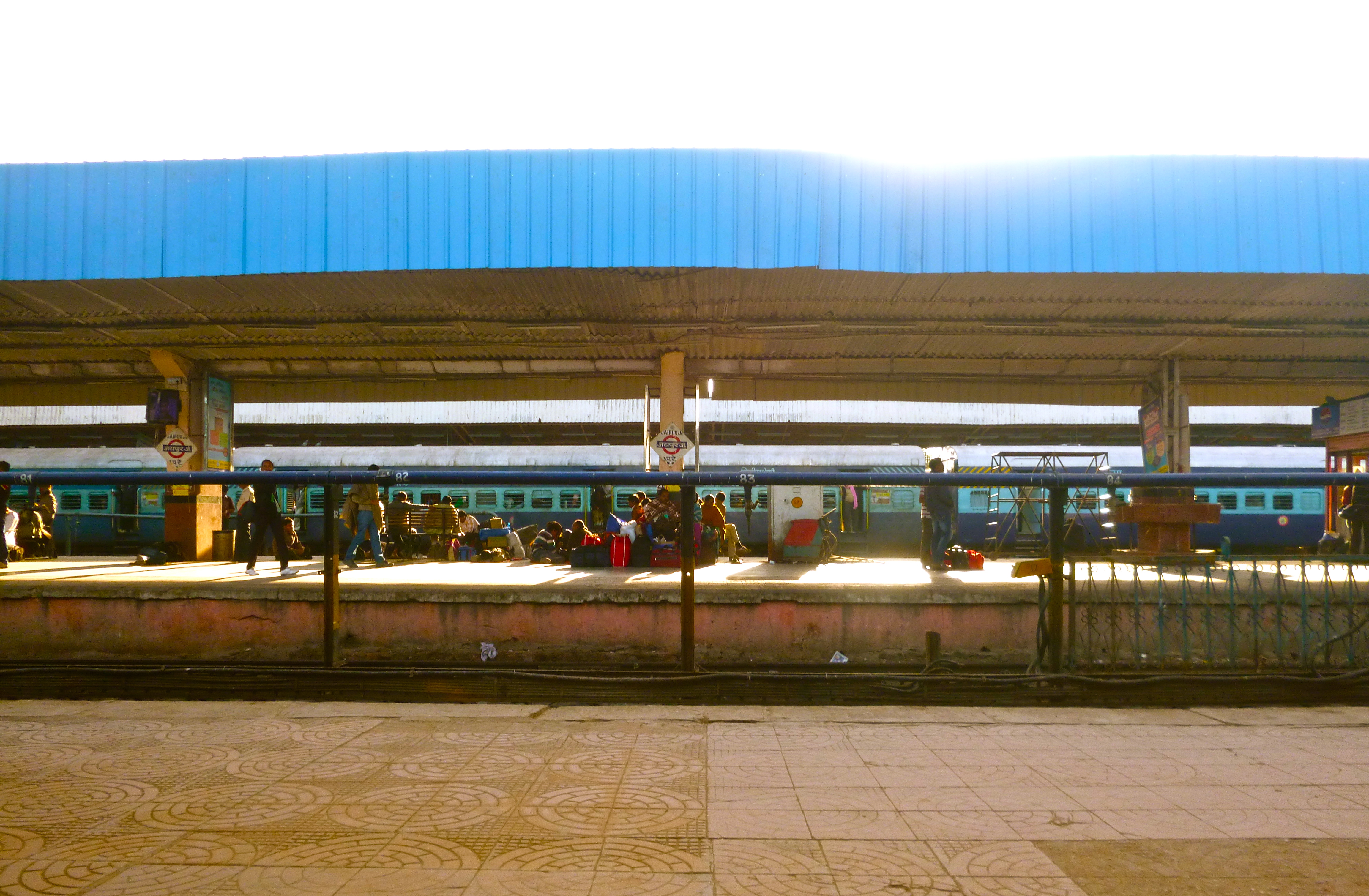
Joe and I have certainly gone mad. Ever since he chewed pan in Jaipur the back of his tongue doesn’t work. It’s funny, but also a little bit worrying.

We cannot pay bills without making mental errors and our conversations have become increasingly erratic and predominately about not bathing, not using toilet paper, and smelling like masala and general funk.

“I’m going to rent a room for an hour in Delhi before our flight out to take a shower.” Joe said to me on the bus out of Amritsar.

“Okay,” I said, “We’ll see what happens in Delhi.” I hadn’t much faith.

The past while I’ve been telling myself that I’m used to wiping my ass with my hand, but it has been a long-standing lie.

I haven’t taken a proper ‘water falling over my head’ shower in over two weeks. My last warm shower was ten days ago. My last cold bucket shower was a week ago. I dream of warm water and clean toilets and drinking water out of the faucet. These are gifts, luxuries of the 1st World that I’m cognizant of and want to utilize, enjoy and savior very much, and for the rest of my life. I’m going to get home and turn the tap on and watch its gliding clean silver pipe cascade into the sink. This I will definitely do.

So anyway, Joe cannot talk and I keep running into things. I’ve bruised both knees, smashed my thigh into the corner of a glass table, and cracked my shin on the corner of our bed frame in Delhi twice. I’m a walking disaster, an absolute Western time bomb of tired, and exhausted, and missing his friends, and missing his work, and missing fresh salads, and of course hot showers.

But, I’m happy. Actually, absolutely happy. Fucking happy. I think India gifted me with this strangely bizarre feeling in my heart that I can only refer to as optimism. I find this ironic, all considering, but life is ironic, and that is where the bulwark of its hilarity, joy and meaning seems to spawn.

INDIA JOURNAL—DEATH ON THE ROAD TO DELHI

Image

January 8th 2013

There was no more fire blanket in Agra. No more mixing of heat waves and smog. Garbage fires burned like tea lamps. Seven boys and a full-grown cow hovered over a dying flame smoking on the street beside a burned out garage to keep warm. We mixed with the cold fog that suffocated the dirt alleyways. The soot soaked precipitation: an amorphous breath storm of nothing, pasted us to the walls, and we roved within it like moving pictograms appear to float in air.

A tuk-tuk chariot dropped us to the bus stop an hour early—an hour 45 in Indian time. We killed the added minutes conversing with two Germans about a tourist wearing a hospital mask taking pictures of a cow eating garbage on the side of the road. Some travelers here keep their head behind a camera, their senses hidden, everything at a distance to remain unaffected and deaf to the present.

We boarded the bus and sat in the very front. Above our heads, a 23-inch television sat precariously inside a cube cutout, propped up by a bible to keep it from falling forward. The bus was over-booked, so there was predictable chaos. Loud words slowly settled into begrudged acceptance. The Germans got on late and had to sit with our 22 year-old driver and his friends. Sardines were running this tin can. Two hours later we fought our way out of Agra proper, and the clock started. This was not going to be a 4-hour bus ride to Delhi.

The highway was a devil’s promenade. Grain trucks, hatchbacks, and motorcycles followed the dragon’s tongue north. The lizard’s cheeks were caked with bulbous sores of poverty—shacks, and camps, and mud hovels inhabited by the damned by circumstances beyond their control. It’s their birthright.

4-hour in, we had progressed 60 kilometers out of the 170 to Delhi. Endless tongue and timeless flatness swallowed time and left us stranded. I was fighting to finish the last two sections of On the Road: Kerouac’s decent into Mexico. At that moment I didn’t share his fascination or his feelings of freedom. Maybe two weeks ago when I was caught up in the bright storm of Bangalore’s flower market, but not now, not on this grey dead road, not on this rusted bus. The breaks hit, we slowed.

I saw the truck veer, the van pull, I saw the motorcycle flip and tumble like a weed of clipped springs. I saw the body of a young man lay like a baby on its side. He had baby feet. Their naked soles, fresh and pink, lay one on top of the other, toes curled in rest.

Time stopped because traffic stopped. Horns blared like trumpets calling the dead to action. Young men leapt from their hatchbacks and motorcycles and surrounded the baby, and like boys, stood there apprehensive to pick up the gentle soul lying so vulnerable and fresh. So, he just lied there alone. Like kings with myrrh and frankincense, the men on the bus all wanted to look at the child, they wanted to see the first born introduced to the world on the tip of the lizard’s tongue, in this universe that had lost meaning. I wanted to see the baby too, but just his feet.

Why no shoes? I asked myself. Why on earth would you ride a motorbike with no shoes on?

Our driver had a schedule to keep and forced his way to the shoulder to pass. The feet were no more, just a pulverized head lying bent back, an ugly retched throwaway face, no longer a beautiful baby boy. The apprehensive boys took pictures with their phones. I saw shoes stranded up the road.

I did something I haven’t done in years. I prayed. I prayed so hard that I curled up like a baby boy in my stomach and wished for the dragon to blow a breath and end this all right now. But, the devil sleeps in Delhi, and we were yet not close enough for him to care.