I’m Not a Newt! I’m an Author.

Screen Shot 2018-11-24 at 10.43.27 AM

“Could you please put down your phone,” she asked.

“Yeah,” I said, without looking up.

“No, like right now.”

“I just need to finish this post,” I said, feeling like I was working against the clock, playing a dangerous game with my girlfriend’s patience.

She sat impatiently, looking at me like I was a cat she was about to throw across the room. All I had left was to add the hashtags. But, which ones to use? If they’re too popular you get lost in the shuffle, too small, what’s the point? Be clever, be funny, be humble; rather, be a humble-brag monster of explosive optimism and saccharine contentment. #superpositivebooklover. #blessed. Post.

Oh, for fuck sake, I’m a tool!

That’s how social media marketing often feels. Not only am I a tool, but a poor man with a gambling problem throwing coins down a well, waiting for one to jump back up. The big bite. Impossible.

When I received an offer from a publisher to publish my historical crime novel, Throw-Away Faces, I was excited. Finally, I’ve made it! I knew next to nothing about the industry, but my publisher seemed legit enough. Beggars can’t be choosers when approaching a publisher unsolicited. I told myself this on more than one occasion. Yeah, okay.

Well, now that the book is published, all I can say is that I’ve accrued thousands of hours of rewrites and edits (good), relationships in the industry which will serve me well down the road (good), and a huge phone addiction predicated on wagering the worth of my book on the amount of “likes” it gets on Instagram or Facebook, or my author’s rank on Amazon Central (VERY VERY BAD).

What I didn’t know getting into the game is that the book market is absurdly competitive and awash with a lot of shit. It pays huge dividends to have an agent when shopping the book, and once publishers show interest, to pick one who pays their publicists to manage your marketing. This is key.

Otherwise, get ready to hate your life, and possibly your book, because you’ll be throwing countless emails, letters and time into review queries that will never be looked at by newspapers, journals, and magazines. And, money into many .com black holes. This will boil down into an ill-conceived effort, commonly called a self-marketing plan, to master nuanced and disingenuous forms of marketing communication forged to manipulate strangers into clicking a link to buy your book. It’ll never be enough. You will look in the mirror and see a Gollum.

When you’re fatigued, your publisher will offer you cooperative packages that are vague in description, but enticing. They whisper sweet nothings into your ear, “Take a load off, Joe.” “Let us do the work.” “We’ll send your book into the hands of the most talented, sexiest, and trusted reviewers in all the land.” And, can you blame yourself for giving in? No, you really can’t, but you will anyway.

The other option is spending countless hours online making virtual friendships and alliances, which is fine, and the right way to do it, but the task is a full-time job and will yank you out of the world of the living.

Don’t get me started on the writer’s block I’m currently experiencing because I now have the attention span of a newt who happened upon a horsefly turd convention.

“How was your day?” she asked.

“Fine.” It wasn’t; I didn’t sell one book. I didn’t get a word written for the sequel. I didn’t do my research. I clicked the refresh button a lot. My phone says my screen time is up from last week. I drank too much coffee. I went down the spiral.

I forgot I’m an author.

So far, this is what I’ve learned from the experience: Do what you think is right to get your book out there, but not at the expense of your creativity. At some point, you just have to let it be, write the next one and make it better than the last. You’ve made your bed for now, but you can get a new one. The worth of your work has nothing to do with a stranger’s thoughtless click of a “like” button. If it was, your time would be better spent engaging in #vanlife.

In the end, stay an artist. Stay balanced. And next time, get a publicist.

You’re not a newt.

Snippets—On Character

Scan 1

There’s this recurring character who appears in my stories. He’s not of one fixed identity; she can be another. Together, they build and destroy, damage and revive memories under a chain-linked arbor of narrative. I’ve called him Simon, her name has been Mary. They’ve both meant the same to me: an undisturbed arc of life after death.

The Neighbor

hallway (1)

I was on a call, in front of my apartment building, telling a friend I couldn’t make it to trivia night because I had to get more work finished on my dissertation. He asked, “When’s that going to be finished–it’s taking forever.” “Soon,” I said. I saw a guy fumbling with a couple boxes enter into my building. I quickly ended the call and chased down the door before it closed.

The first time I met my neighbor was in the elevator. He cradled a box of papers in his arms and looked at the elevator’s floor buttons like they were about to tell him something interesting. There was another box at his feet with an Irish drum and a ukulele in it. I said, “Hi.” I said, “Nice bodhran. Nice ukulele.” He said, “Yeah.” That was the extent of it. We got out on the same floor, walked to the two doors closest to the elevator, and acknowledged that we were neighbors without acknowledging each other.

The next week, I saw a strange man get out of a green hatchback parked in front of the apartment building. His small, tasseled, black leather coat awkwardly hugged his soft body like an ex-girlfriend. He wore a newsboy cap, oval glasses, and fucking bike shoes cloaked by a pair of baggy boot-cut jeans. He turned, looked at me and either smirked or sneered, I couldn’t be sure. His beady eyes followed me as I passed. I felt that he was as judgmental as me. What a dick.

A couple weeks went by without seeing my neighbor. I forgot about him. His little coat, his newsy, and his wire rimmed glasses faded from my memory. But then he returned. It was hard to tell if it was him at first sight because it was nighttime and he had a head lamp on. He was by the front door, standing over his road bike, plunging his spandex-wrapped cheeks between its top tube. He was fiddling with his phone. I approached. He didn’t look up. I held the door for him and waited. After a moment he looked up, and then shewed me. Shewed me with a flapping hand. Shewed me and then smirked or sneered. I stood my ground, held the door, and he looked up again, raising his hands like he didn’t understand. I said, “Oh, I didn’t hear you say anything and thought you were swatting at something.” He said, “As if,” and looked back down at his phone. “As if.”

At 6am the next morning the knocking came. It started as a soft tap on my bedroom wall. It had a rhythm: boomp, boomp, boomp. But then it grew louder and faster, and then there was a soft whimper followed by a loud growl. A sex growl that was so vulgar and tactless, I felt less annoyed by being woken up by my neighbor having sex than sorry for his partner. But after his egregious sexual release, I heard her giggle, giggle like it was cute. Cute sex growls. I looked over at my girlfriend and she was staring at the ceiling. That growl will be seared into her mind all week, maybe longer even. The growling continued, every morning, the loud animal-like interjection soaking through our bedroom wall.

Things were going too far. The boomps and the growls and the annoying howls from his two miniature long-haired terriers began to wear on me. I couldn’t write in the morning any longer, I couldn’t read at night over the irregular strumming on his ukulele. I prayed for peace and quiet, for evenings in silence and mornings filled only with the sound of chirping birds and the whoosh from the local bus driving past. But things continued to get weird, and the frequency of our meetings increased.

The following week, I went on a walk to clear my mind and who was it coming toward me in full gallop but my neighbor, wearing an olive-green, wrestling onesie and a red, white and blue terry cloth headband. His pectoral flaps oozed through the straps of his ill-fitting suit, and I could tell the depth of his bellybutton from 50 feet away. Half inch. He and his girlfriend drew nearer, and I could hear him giving her running advice about proper running form. “Make your spine an oar.” “Envision that your feet are rocks wrapped in pillows.” “Don’t look at me, look straight, past the finish line, to your goal,” he said, all in the span of thirty-feet. They passed, and he gave me a nod.

It was at this moment, just after his incoherent mansplaining, that I realized that this psychopath is happier than me. In fact, way happier than me.

The reckoning came yesterday. It was a long day at work. My hands were swollen from swinging a hammer all day. The elevator opened and he was standing outside his apartment door in a blue kimono, both his dogs tied around his leg, with a bowl of cereal in his hand. He slurped a thimble of milk from his spoon and looked up at me. His dogs began to circle and bark. I’m sure the expression on my face asked the question that he immediately answered. “My dogs need a break from the apartment,” he said. “But this is the time of day where I don’t allow myself to put any effort into anything, so I can’t walk them.”

“I wish I hadn’t put any effort into anything today,” I said.

He nodded in agreement and pulled the lapels of his kimono a bit tighter to hide his chest hair.

“I have a regiment,” he said. “Sex daily, coffee daily, work M through Fri, lunch at 1pm, run every other day, bike to work three times a week, ukulele every night to settle my existential disquiet. All great, but it’s the hour after work, the block of my dia” (why he said day in Spanish, I have no idea) “where I don’t allow myself to put any effort into anything, when I feel the most special.” His face made that pained crease again; his smirk or sneer, I realized, was a signal of his hope that you understand what he’s doing and why he’s doing it. “Shit man, I must be boring you though,” he said.

“No, not really,” I said, in a state of confusion and pre-hilarity. “I’ve noticed that you take your regiment seriously.”

“You mean the kimono? Yeah, I’ve got a costume for every phase, changing into the right uniform for the job,” he said. “Helps me complete the task.”

His little greasy dogs stared at me, tremoring in place.

“Well…” I said, taking a step towards my door.

“What’s your best part of the day?” He said.

“Eating.”

“Besides eating,” he said. “Carnal desires are dope, but I’m talking about that human shit.”

“Human shit,” I repeated. “Okay, writing.”

“I knew it. I knew the construction thing was a front.”

“…”

“I mean, you’re not a football fan, I can see it, so you start tracing it all back, and nothing makes sense, man. You ever trace it all back while you swing that hammer, but none of it makes sense?”

His lips turned into the letter ‘o’ and he stood assertively still like he just dropped an existential A-bomb in our hallway.

“Yeah, well choosing the path of least resistance can keep the pedals moving, but a bicycle can’t get you over an ocean,” I said.

“BOOM!” He said and opened his fist, palm to the floor, to imitate a mic-drop.

“Keep doing you, man.”

“You too.”

I turned into my door.

“I forgot to mention,” he said, “that we play Settlers of Catan every other Friday night at 8pm if you and your lady want to come by?”

“What do you wear on your gaming nights,” I asked.

“My periodic table t-shirt,” He said, proudly.

“Sounds good. We’ll be there. This Friday?”

“Naw, next.”

I entered my apartment and both my cats were there to greet me. It smelled like the cat box. Feline wasabi. I pulled off my work clothes and looked at my dirty face in the bathroom mirror. Despite the grit and dust, I knew I looked better than I have in a long time. I reached for the hot water knob when I heard pounding coming from the other side of my bathroom wall.

“Put me in a story,” my neighbor shouted. “Enjoy your shower.”

“Yep,” I hollered.

I took a long, hot shower and watched the sediment on my body funnel down the drain. I toweled off and shaved. Clean, but alone. Liz was still working at a coffee shop up the street. I thought to myself, “I quit drinking nine weeks ago, so why do I feel so depressed?” My little cat waited outside the bathroom door and looked up at me when I opened it. “Have you ever tried to trace it all back, Kitten?” I asked her. “Tried to trace it back and ask yourself, ‘why do I always wait outside the bathroom door while dad takes a shower?’” She gave me one of her gravelly smoker’s meows, and I took her as answering, “No.”

I checked my email and saw that my university will not extend my deferment for another year. “It’s been four years… pay and finish or don’t… we don’t care…” was the gist of the head of the Postgraduate Department’s email to me. I checked the box and sent it to the trash bin.

I tried to write but was too tired to put down anything meaningful. I need a regiment, I thought. Liz came home and I told her I love her. I’ll write good words tomorrow. Better words tomorrow.
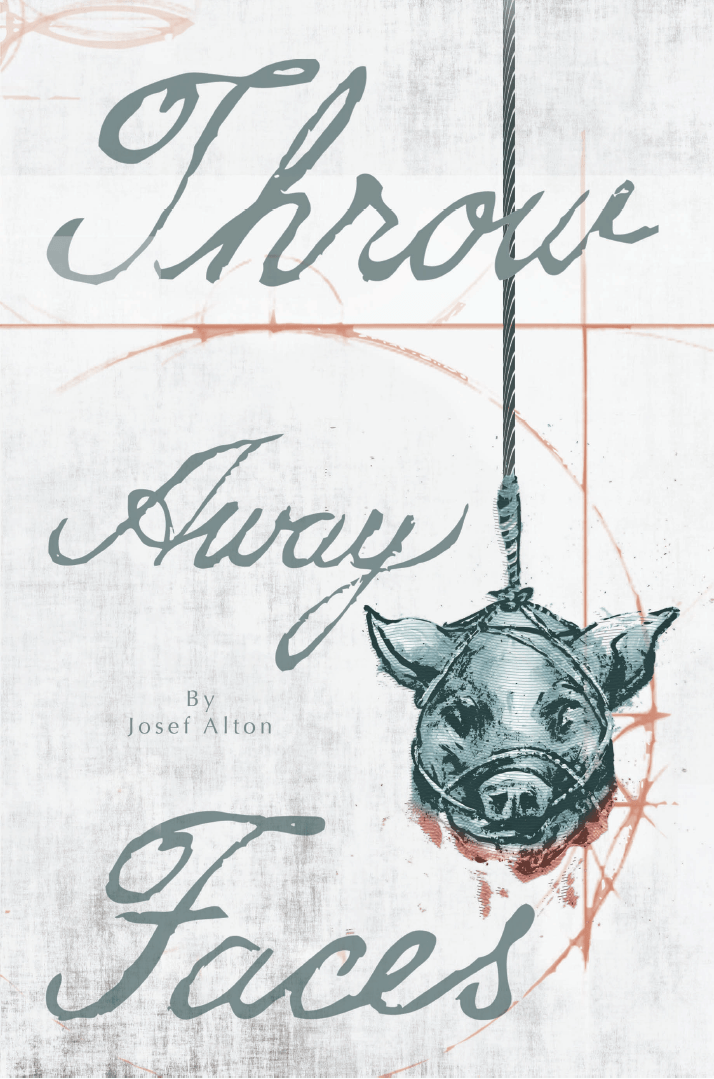
 

Throw Away Faces—The Cell of Nostalgia

byres


XI

       When I was a child in Glasgow I could see Ben Lomond[1] on a clear day from my father’s office window. It was not often but when he was free he would tell me stories of the Highlanders that lived above the city. He told me tales of the Highland caterans[2] stealing livestock for blackmail and tales of Rob Roy[3] MacGregor’s blood feud against the Duke of Montrose.[4] I would look at the dim outline of the mountain as he recited the long list of events that led to both the Stuart Rebellions.[5] And when he was done with those stories we would look down onto the city and he would tell me about the riots that took place against the Union with England[6] and the Malt Tax Riots.[7]

He said long ago our family were Highlanders, but not anymore, no matter what my grandfather and uncle said. He said that we were outlaws, but at a time when most men were. Back then there was enough lawlessness going around between those abusing their powers and the malnourished, that it was pointless pointing fingers at people from so long ago. Ben Lomond and the city below it held these stories.

When I was a few years older a factory was erected next to my father’s office and blocked our view of the Highlands. Ben Lomond was gone and Glasgow was too for that matter because all we could see out of the window was a wall of stones.

“They brought the Highlands closer to us,” father said, to console me the first time I saw that the view was erased, “all this stone and mortar is from there.”

His words did not console me. I recall it was about that time that I stopped daydreaming about the Highlands, what my ancestors might have looked like, and of Rob Roy. The tall buildings kept my eyes turned inwards, when maybe lang syne the vastness of Scotland’s countryside made men more contemplative of their relationship with the wild. Our summer visits to the Isle of Skye never made me feel that way. I remember my feet always being wet, and shivering in bed with little more than a sheet to keep me warm.

Upon my first break from university I visited our new country home in Bearsden. The white-capped Ben Lomond was framed inside a windowpane rising above my father’s desk in his study. It meant nothing to me, but it did to him and so I smiled and said to him he did the right thing to move mother away from the retched smoke of the city. 20 years had been too long in one place and Bessy, our old castle, had become a prison.


[1] Ben Lomond: Mountain north of Glasgow located at the foot of Lock Lomond. It’s doubtful from Enoch’s central Glasgow location on Byre’s Road that he could have seen the mountain, but I made it so.

[2] Highland caterans: A Highland band of marauders, professional thieves, and/or mercenaries.

[3] Rob Roy MacGregor (1671-1734): A Scottish outlaw and folk hero. A traditional Jacobite, MacGregor was pro-Stuart and Catholic. He was also a cattle herder, and engaged in blackmail to protect people’s herds from theft, sometimes from his own theft.

[4] Feud with the Duke of Montrose: After losing his lands he (MacGregor) waged a blood feud against his dispossessor, James Graham, 1st Duke of Montrose. The tales that follow include a series of adventures where Rob Roy escapes capture and execution. Bloody brilliant!

[5] Scottish rebellions of 1715 and 1745: The 45’ explained earlier (Pg. 47, note XXX) both were failed uprisings to reinstall the Catholic Stuarts to the English monarchy.

[6] The Act of Union 1707: At this time, England and Scotland were two separate states, each with their own parliaments, but under one monarch. Following the War of the Three Kingdoms (1639-1651) and the Glorious Revolution (1688), which saw the overthrow of the Scottish Stuart Dynasty from the English throne, the new Protestant English monarchy increased its effort to consolidate power on the isles. Scotland, politically fractured and near economic collapse, was forced into union in order to open England’s colonial markets for trade. The Act of Union expanded English control in Scotland at a time when Scotland was looked at as a threat, and physically speaking, a harbor for England’s continental enemies to exploit, namely the French.

[7] Malt Tax Riots: Began on June 23rd, 1725 in retaliation to the imposition of the English malt tax. As the economic promises of the 1707 Act of Union had yet to materialize, Scottish citizens took to the streets in protest and openly riot. The fiercest riots and anti-English sentiment existed in Glasgow.

The Elusive Salmon

salmonmedium

Across my little apartment is the city locks. The locks see every boat coming in, or going out to sea. Though there are a lot of boats coming and going there’s also a good portion of the day when the locks are empty, and when they’re empty in the late summer and early autumn, schools of spawning salmon enjoy the peace by leaping out of the water, and going plop back in.

I say plop because that’s usually all you hear. It’s not as easy as you might think to spot a jumping salmon. Try as you may, staring in one spot and waiting for a salmon to jump is a fool’s errand.

Today’s Friday, and I have no work to keep me from the locks. I was also here this past Monday, and the Friday before last, not working, instead listening to the salmon go plop.

The rest of my time spent has been in my apartment. I’ve been on the computer, looking through job postings. With the click of a button, another resume goes into the blackness. For each prospective employer, I tell them that I’m qualified, a quick learner, and nearly perfect. I wait and watch for a reply. I wait, and watch.

While I wait, I try not to think about how hard I’ve worked to be broke, how maybe my quest to define myself as independent, unique, and a stand-alone has greatly compromised my ability to write a good resume and cover letter—I can’t seem to connect.

I finally pull my eyes away from my computer screen and make something to eat, and when I return, another rejection letter has been sent from a web address that begins with, “donotreply.” Cowards.

All these rejections come when I’m not looking. It’s the second I break my will to force good news that the tech world tells me to keep fishing (and to follow them on Twitter, etc.). I get angry, and then sad, and then I tell myself that I’m an anomaly, a force of nature that their vetting algorithms cannot grasp or define. When these half-truths escape my lips, I become thirsty for alcohol; for a cigarette before I return to my seat at the gambling table.

Yesterday, I spent the day doing something different. My mother had called to tell me that my brother lost custody of his daughter and threatened to kill himself. He texted me later and asked me to take care of his life insurance policy. He then turned off his phone and disappeared. I spent yesterday hunting.

When a salmon goes plop and you turn to the noise there’s a gentle wake. It spreads and rolls from its starting point in perfect symmetry. The succession of arches spread until they are swallowed by the bigger currents surrounding them. They die into the fold.

My brother’s wake continued for some time before he jumped. Not off a bridge, or a building, but by text message. He contacted his daughter to tell her that everything’s fine. He was alive.

I spent yesterday guessing where my brother could be, but I didn’t know until I did. I haven’t seen or talked to him. I’m not at all ready for that.

Some boats have arrived now. In particular, a fishing vessel with three deckhands chattering in Italian. The salmon are still jumping, and I can hear that language too. I’m too tired today to apply for jobs. It’s a fool’s errand anyway.

Today, I came to the locks and saw a large salmon, looking green and pink, she jumped right in front of me while I was looking at the boats waiting to go out to sea. She went plop and I saw the whole thing.


Prologue: A letter, a manuscript, and plenty of murder still to come

Co-Dublin-Dublin-old-image-of-Trinity-College-and-Bank-of-Ireland-c.1910s-with-vintage-tramsPROLOGUE:

Dear Doctor Dooley,

You will not remember me, but you tended to a friend of mine who died many years ago. At the time when we met outside Glasgow I had no idea that we would be linked through a common fate, death following us wherever we settled. Unlike you, I did not choose an occupation waged inside the crypt; I became a lawyer. As I write I am aware of the irony entangled within my words, and I will leave it for you to ponder. I will say, however, that it was not the opacity, rigidity or even the aridity of the law that deadened my heart, but rather its miscarriage, and further still a disturbed individual who waged an ill-conceived crusade against a miscarriage of justice through an evocation of evil.

It is not my intention within this letter to explain the details of my ill-fated journey into the forests of the American frontier. Rather, I tracked you down some years back to find that you had long since departed for Ireland and I let the case rest. It was not until last week that I picked up the newspaper and read about the strange murders taking place in Dublin and their disturbing similarity to the murders I experienced in Seattle when I was a young man.

I have spent the past few days writing furiously to reconstruct the events of June 1889 in Seattle, as I saw them. I know of no one else in Dublin, and I am sure, based on your standing as a doctor, that you have the proper friends to contact if this manuscript moves you and perhaps compels you to inform the Royal Irish Constabulary of the innocence of the girls suspected of murdering their fathers, and also the resurrection of a killer. I leave this manuscript with you in good faith, as I left my friend in your care many years before. Let us pray for a more positive result than the conclusion to our first meeting those many years ago.


Your servant,

Enoch Campbell

The Sailor

images

He was scared and I was sorry for having to draw blood a second time. He was a sailor, an alcoholic; a dry docked man too old to sail with a son cemented on the shore. His liver was crying for a break and he cried out when I stuck him a second time. He pleaded, “Don’t stab me again.” The Medic nodded at me to stick him until the blood was milked good to sample his blood sugar.

On the rig he was sweaty and grey. His heart rate started to crash and the medic asked me, “Josef, could you please undo the patient’s shirt.” We pulled the rig off to the side of the road. He was dying, or at least it looked like it. It felt like it. I stopped breathing and then I did breath and I became loose and open. We double-checked his patches, I swabbed his arm, and the medic gave him something magic, his BP cartwheeled then jumped back up, like an impossible acrobatic trip up a flight of stairs.

“I’m cold,” he said after a while.

I put a blanket around him and we continued for the VA. He had been in the navy. “That’s where I learned to love the sea,” he said. “I’ve passed through the Panama canal more times than my son has come down from Alaska to visit me,” he said. “Four times,” he said.

His son was in his dad’s living room when we had arrived on scene. He looked scared. The old man was worried that his son would never come back again because he got sick. “I’m weak and old,” he said. “I think you’re brave, sir,” I said. “No, I’m old and scared of everything,” he said. I didn’t know what to say to that, but I kept him talking until we arrived to the ER.

I keep dreaming about him. I keep dreaming that it was just me in the rig and I didn’t know how to fix him and he died.

14 -13 = 99

Dear Grandma,

There was this one time when I was young and in love that you told me a story about when you were young and in love. You were in the kitchen simmering milk when grandpa got home from work and the two of you started dancing in the kitchen. Your arms bumped into the saucepan and spilled the milk all over the floor. But, instead of cleaning up the mess you and grandpa paid no attention and kept on dancing on top of it. You said that when you’re in love nothing else matters besides moments like those. I imagine now, since your passing yesterday, that you and grandpa are dancing together again, not caring about the spilled milk, or of time, or of anything. You can stay in that moment forever. Your waiting is finally over. 

Your Grandson,

Josef

INDIA JOURNAL—DEATH ON THE ROAD TO DELHI

Image

January 8th 2013

There was no more fire blanket in Agra. No more mixing of heat waves and smog. Garbage fires burned like tea lamps. Seven boys and a full-grown cow hovered over a dying flame smoking on the street beside a burned out garage to keep warm. We mixed with the cold fog that suffocated the dirt alleyways. The soot soaked precipitation: an amorphous breath storm of nothing, pasted us to the walls, and we roved within it like moving pictograms appear to float in air.

A tuk-tuk chariot dropped us to the bus stop an hour early—an hour 45 in Indian time. We killed the added minutes conversing with two Germans about a tourist wearing a hospital mask taking pictures of a cow eating garbage on the side of the road. Some travelers here keep their head behind a camera, their senses hidden, everything at a distance to remain unaffected and deaf to the present.

We boarded the bus and sat in the very front. Above our heads, a 23-inch television sat precariously inside a cube cutout, propped up by a bible to keep it from falling forward. The bus was over-booked, so there was predictable chaos. Loud words slowly settled into begrudged acceptance. The Germans got on late and had to sit with our 22 year-old driver and his friends. Sardines were running this tin can. Two hours later we fought our way out of Agra proper, and the clock started. This was not going to be a 4-hour bus ride to Delhi.

The highway was a devil’s promenade. Grain trucks, hatchbacks, and motorcycles followed the dragon’s tongue north. The lizard’s cheeks were caked with bulbous sores of poverty—shacks, and camps, and mud hovels inhabited by the damned by circumstances beyond their control. It’s their birthright.

4-hour in, we had progressed 60 kilometers out of the 170 to Delhi. Endless tongue and timeless flatness swallowed time and left us stranded. I was fighting to finish the last two sections of On the Road: Kerouac’s decent into Mexico. At that moment I didn’t share his fascination or his feelings of freedom. Maybe two weeks ago when I was caught up in the bright storm of Bangalore’s flower market, but not now, not on this grey dead road, not on this rusted bus. The breaks hit, we slowed.

I saw the truck veer, the van pull, I saw the motorcycle flip and tumble like a weed of clipped springs. I saw the body of a young man lay like a baby on its side. He had baby feet. Their naked soles, fresh and pink, lay one on top of the other, toes curled in rest.

Time stopped because traffic stopped. Horns blared like trumpets calling the dead to action. Young men leapt from their hatchbacks and motorcycles and surrounded the baby, and like boys, stood there apprehensive to pick up the gentle soul lying so vulnerable and fresh. So, he just lied there alone. Like kings with myrrh and frankincense, the men on the bus all wanted to look at the child, they wanted to see the first born introduced to the world on the tip of the lizard’s tongue, in this universe that had lost meaning. I wanted to see the baby too, but just his feet.

Why no shoes? I asked myself. Why on earth would you ride a motorbike with no shoes on?

Our driver had a schedule to keep and forced his way to the shoulder to pass. The feet were no more, just a pulverized head lying bent back, an ugly retched throwaway face, no longer a beautiful baby boy. The apprehensive boys took pictures with their phones. I saw shoes stranded up the road.

I did something I haven’t done in years. I prayed. I prayed so hard that I curled up like a baby boy in my stomach and wished for the dragon to blow a breath and end this all right now. But, the devil sleeps in Delhi, and we were yet not close enough for him to care.

INDIA JOURNAL — DESPERATE DAVE — MUMBAI

Dave is from Manchester. He’s an alcoholic. Dave’s an alcoholic in love with a beggar. He said to me that he’s been offered sex for as little as three Rupee. He’s a Manchester City fan. He said that he’s been in Mumbai for six weeks; the bar manager at the Alps Tavern said he’s been living in the train station for 5 years. Dave says a lot of things.

Everyone in Colva knew Dave. The businessmen, the bar men, the beggars, the rug salesmen, even the dogs. The men at the Western Union knew Dave very well.

That’s how Joe and I met the skinny, chinless man I called desperate Dave. We were eating at the Alps when he invited himself to our table and said that he was desperate and needed help. He needed to get his money held up in the Western Union.

His eyes shifted nervously as he told us his sad story and his accent became chewier the deeper he took us down his well. To get his money he needed a name and an address so the money could be wired to someone beside himself.

“Why?” Was the question Joe, the two Aussies we had meet at the hostel, and myself asked. “This bloody beggar that I thought was my friend stole my passport.” He said.

Dave said that all Indians are liars and cheats.

The Aussies wanted no part in it, but Joe being Joe wanted to see where this was going to lead and agreed. I actually didn’t mind because Dave’s fear was honest enough and he appeared far too high strung to actually pull off a legitimate con. So I said to Joe, “Go for it.” But that my signature stays in my hand, so don’t ask me for nothing.

Dave got smashed quickly and we went outside for a cigarette and he knelt down nose-to-nose with a three year-old beggar girl and yelled in her face to fuck off and go home — home being a mat beside the curb on the opposite side of the road. She just laughed at him. Enraged, Dave picked her up and her two year-old brother and threw them over his shoulders and walked them across the street to where their mother was asleep in the dirt.

Supposedly Dave gets angry when he drinks. But I get angry when drunks exercise their insecurities. He was lucky to have read my stare right when he returned, and he apologized. He said when he gets his money he’ll get us drunk.

The next evening I accompanied Joe and desperate Dave to the Western Union and while they were dealing with that mess I saw that there were phones there and I wanted to call home but I knew it was too late there. Under the circumstances it wouldn’t have been the best idea anyway.

Anything with Dave is possible and sure enough the name on the money transfer didn’t match Joe’s name, as it was still in Dave’s, so Dave had to call his mother in Manchester to sort it out. Joe and I got a beer with Dave while we waited for the money to be re-wired, and found Dave when sober to be quite the pussy cat, of course—just a starved alley cat too afraid of life to live it; killing himself slowly to end it.

Dave got his money. We walked off into the haze of Mumbai’s night. Two hours later, when we were trying to make a night out of New Year’s Eve, we ran into Dave on the steps of the Alps, pissed drunk and probably broke again. He looked lost in thought, wondering when the next Joe Stockman would arrive off of the steel trains willing to help.

We counted off the new year at the Georgian gate on the harbor—exactly where we started our time in Mumbai—then headed back to the hostel and listened to the fireworks explode in our ears, the taxis honk continuous, and the cheers rattle off the brick façade of the Taj Mahal Hotel until morning. Then we left it all behind. Left Dave behind us for good.